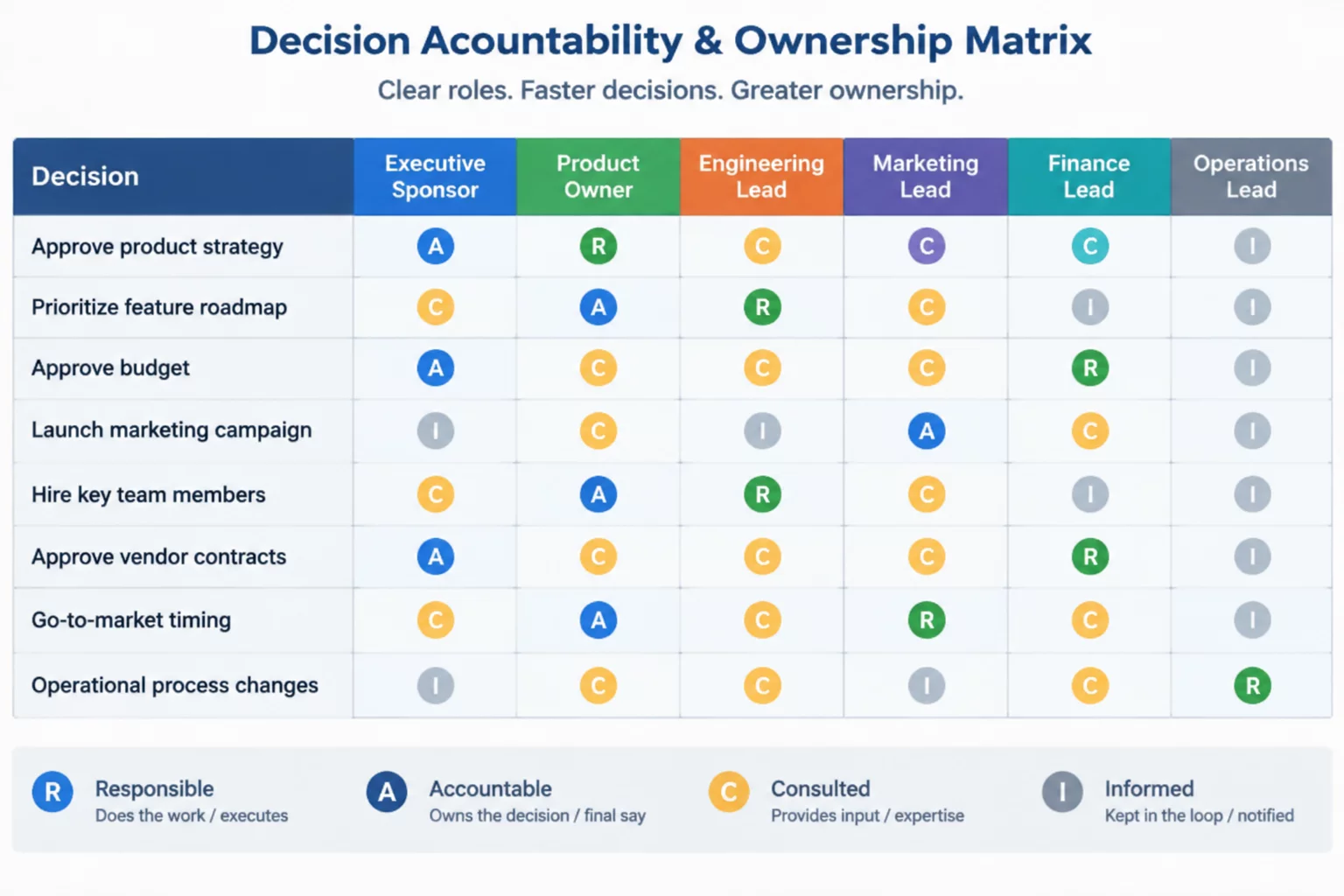
Foundations of Operational Decision Ownership
In enterprise workflow schematics, a diamond represents a bifurcated threshold where states permanently divide. Diagrams regularly assign task rectangles to explicit departments, yet designers leave the decision diamond hovering in empty canvas space without a clear custodian. Without assigned stewardship, workers treat ambiguous criteria as informal judgment calls, triggering contradictory branch traversals across shifts.
Ownership dictates who inspects evidence, who validates conditional parameters, and who legally accepts liability for selecting an alternate branch. Placing an ownership property directly on the metadata canvas eliminates hesitation at the moment an exception triggers. It creates unambiguous audit footprints throughout regulatory reviews.
Configure Custom Ownership Keys in draw.io
Bind custom data attributes directly to your diamond nodes to track owner roles and delegation pathways without diagram clutter.
Methods for Tagging Nodes in Process Architectures
Architects must apply structured conventions across swimlane maps to prevent disputed boundaries between adjacent operational departments. Three distinct rules establish clear lines of responsibility:
- Lane Containment Discipline: Anchor every decision diamond squarely within the horizontal swimlane of the job title that renders the verdict, never across the dividing border line between collaborating teams.
- Explicit Exception Custody: Provide a named escalation role for every rejection or secondary branch so that non-standard requests never enter untracked queue files.
- Single-Signoff Verification: Isolate multi-approver committee steps into serial evaluation diamonds so each distinct participant remains fully accountable for their individual gate criteria.
"When a decision is owned by everyone in general, it is evaluated by no one in practice. Precise workflow diagrams must hold a named role accountable at every conditional fork."Steve Jobs — Framework Governance Lead
Ownership Specification Standards
The following operational benchmark categorizes decision ownership levels across enterprise workflow models.
| Ownership Tier | Operational Responsibility | Audit Standard |
|---|---|---|
| System Deterministic | Automated rule evaluation without manual human intervention. | Automated Log |
| Line Operational | Frontline clerk applying documented binary acceptance checklists. | Peer Verified |
| Escalation Delegate | Senior analyst reviewing borderline exceptions and secondary threshold failures. | Dual Signoff |
| Executive Arbiter | Policy steward signing off on regulatory departures and contract overrides. | Executive Log |
Frequently Asked Questions
Model consensus as two consecutive decision diamonds in sequence. Splitting the review forces both departments to declare distinct evaluation criteria, preventing disputed accountability when one side dissents.
Always designate specific organizational roles rather than personal employee names. Roles remain constant during internal staffing transitions and preserve diagram integrity over time.
Place automated evaluations in a dedicated System swimlane and tag the shape metadata with the specific service name or business rules engine identifier responsible for execution.