Boundary Management in Decision Toolchains
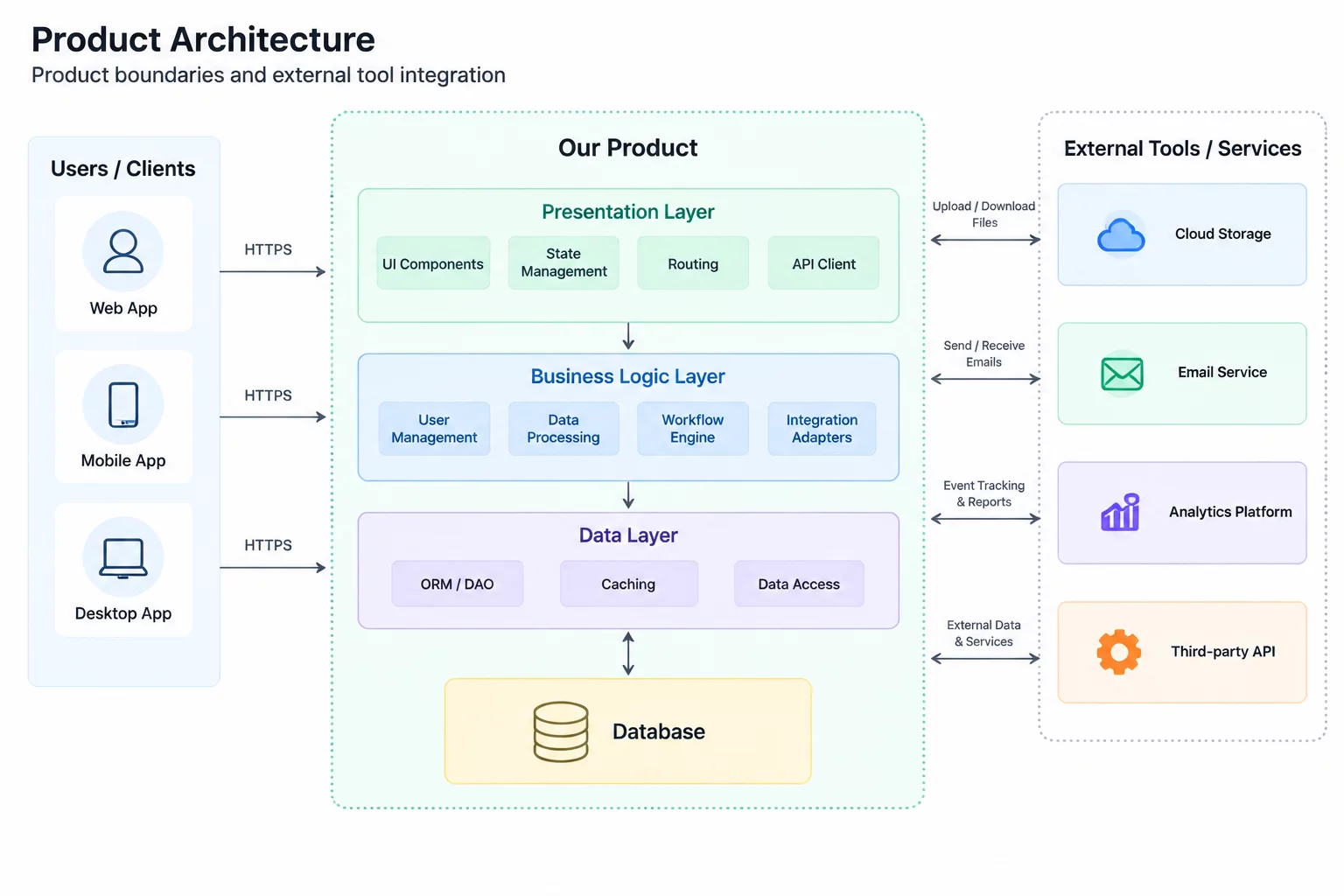
Operational teams often face the temptation of turning their diagramming tool into an ad-hoc rules engine. When teams try to execute logic directly from graphical shapes, diagram clarity deteriorates and workflow maintenance collapses. DecisionFork Atlas advocates for strict system boundaries. Your visual diagrams in draw.io act as the authoritative visual blueprint, capturing condition forks, threshold gates, and branch ownership.
External integrations should extract metadata rather than inject runtime state into the canvas. By treating the diagram file as a declarative reference asset, you link individual fork IDs to project management boards, compliance archives, or deployment pipelines without creating brittle bidirectional dependencies.
draw.io Fork Mapping Guidelines
Review our detailed conventions for annotating custom shape properties, linking outbound branches, and exporting clean diagrams.
Extracting and Feeding Branch Metadata
Establishing a stable interface between visual documentation and execution software requires standardized property keys. Instead of relying on arbitrary text labels, attach machine-readable properties to each decision vertex.
- Assign immutable fork identifiers (such as DF-FORK-001) to custom XML shape properties in draw.io for direct reference in external systems.
- Export diagram XML or compressed SVG into continuous integration pipelines to generate downstream documentation and changelog diffs automatically.
- Link individual outcome branches to discrete task tracking templates, ensuring developer tasks match branching conditions exactly.
When diagram documentation attempts to become the runtime execution engine, it fails at both. Keep the blueprint authoritative and the runtime decoupled.Zack Snyder, Principal Enterprise Architect
External Integration Matrix
The following specifications outline how DecisionFork diagrams interface with enterprise environments, configuration management systems, and issue trackers.
| External Platform | Integration Method & Output | Boundary Status |
|---|---|---|
| Git Repositories | Version-controlled XML and SVG source diffs with branch-level change summaries | Native Source |
| Issue Trackers (Jira / Linear) | Deep links to specific fork node IDs referenced in acceptance criteria tickets | One-Way Reference |
| Enterprise Wikis (Confluence) | Auto-updating SVG renders embedded in operational standard operating procedure pages | Read-Only Embed |
| Compliance Archives | Periodic PDF exports paired with tabular decision criteria audit manifests | Immutable Snapshot |
External Integration Details
Yes. Because draw.io stores diagram models in standard XML format, your version control repository can monitor diagram file commits. Webhooks or pipeline triggers can parse modified fork IDs and notify compliance or engineering teams of operational logic changes.
No. Under the DecisionFork framework, diagrams represent static structural specifications rather than dynamic sprint tracking boards. Live status synchronization creates unnecessary visual clutter and obscures core routing logic.
Use the draw.io native Edit Data dialog (Ctrl+M or Cmd+M) to append custom key-value pairs such as fork_id, owner_role, and escalation_sla. These custom attributes remain embedded in standard shape XML without requiring third-party plugins.