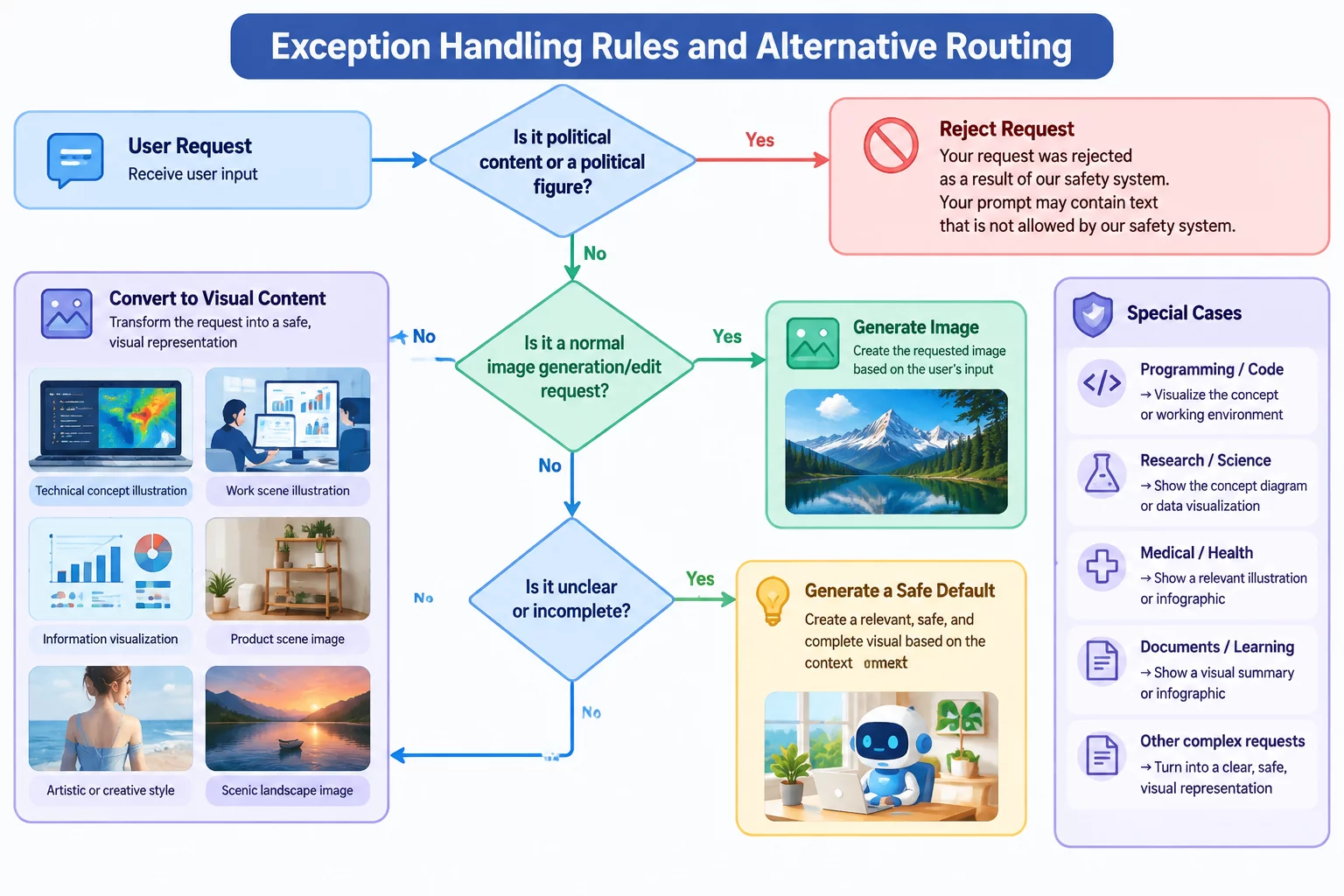
Why Exception Paths Must Be Governed as First-Class Workflows
In traditional process diagrams, exceptions are frequently relegated to dashed gray lines or ambiguous footnotes tagged with generic instructions like escalate to supervisor. This casual depiction creates systemic blindness within operational teams. When real-world inputs deviate from expected ranges, operators lack concrete transition rules, resulting in stalled cases, arbitrary workarounds, and unrecorded triage cycles.
A robust decision fork model treats every non-standard condition as an independent branch requiring distinct evaluation criteria, SLA tracking, and resolution boundaries. Segregating these edge cases from the happy path clarifies operational dependencies, enforces compliance visibility, and prevents abnormal states from quietly degrading downstream systems.
Structuring Branching Logic in draw.io
Learn how to format diamond gates, color-code deviation streams, and implement visual indicators for exception lifecycles.
Core Anti-Patterns and Remediation Standards
Mapping exception logic demands rigorous boundary definitions. Operational diagrams encounter acute failures when three prevalent diagramming habits are allowed to persist across operational runbooks:
- The Infinite Return Loop: Routing a rejected record directly back to an earlier decision step without modifying payload states or establishing max-retry ceilings.
- Unassigned Orphan Branches: Terminating an exception path in an action box that lacks an assigned operational role, team queue, or automated purge rule.
- Premature Rejoining: Merging an exception route back into the standard flow prior to running validation audits, contaminating clean pipeline metrics.
An unmapped exception path is not an edge case—it is an undocumented decision where the operator is forced to improvise policy on the fly.Xavier Woods, Operational Governance Lead
Standard Classification and Hand-off Protocols
The classification table below defines the formal containment and re-entry requirements for recurring operational deviations across enterprise decision pipelines:
| Deviation Category | Containment & Hand-off Rule | SLA Ceiling |
|---|---|---|
| Payload Data Anomaly | Quarantine to intake clerk; trigger automated re-request notice. | 4 Hours |
| Policy Violation | Route to Tier-2 Compliance; freeze dependent workflow instances. | 24 Hours |
| External Service Timeout | Switch to backup queue; retry 3 times before manual incident alert. | 15 Minutes |
| Regulatory Discrepancy | Lock dossier; transfer full audit log to designated legal officer. | 48 Hours |
Frequently Addressed Dilemmas
If the deviation nullifies the core prerequisites of the process—such as a failed compliance check or customer cancellation—it must terminate at a dedicated terminal end-state. Rejoining is only permissible when remedial actions restore the dossier to full compliance before the re-entry gate.
Enforce a decrementing retry counter within the diagram metadata. When the counter reaches zero, route the case directly to an escalation handler rather than allowing repeated re-submissions to the same reviewer.
If an automated sanitization step fixes the error synchronously, model it as an internal task. However, if human judgment or external contact is needed, model it as an explicit exception branch with its own ownership.