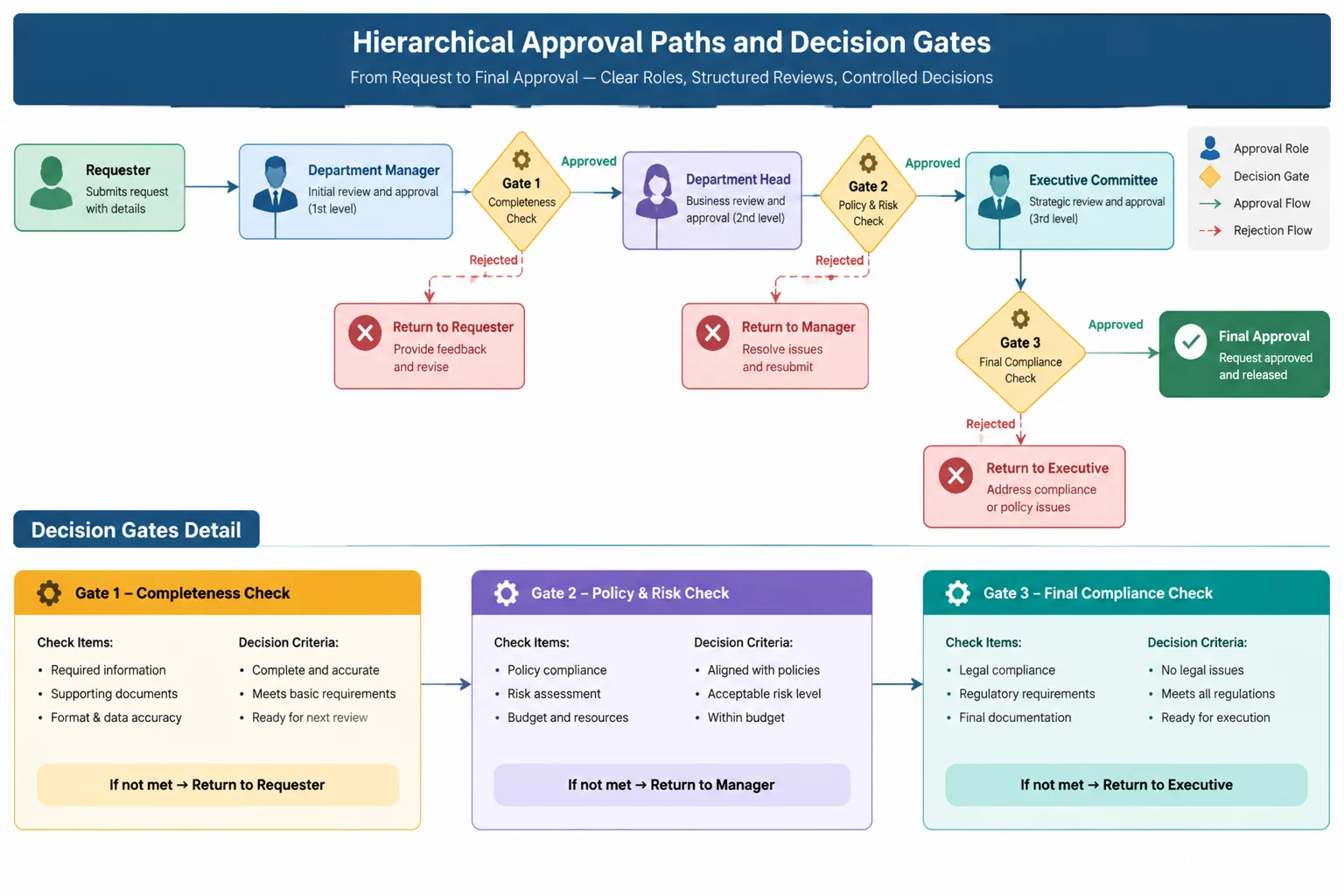
01DECONSTRUCTING THE APPROVAL BOTTLENECK
When enterprise workflows stall, the culprit is rarely lack of diligence; it is ambiguous diagramming that turns decisive review gates into endless looping activities.
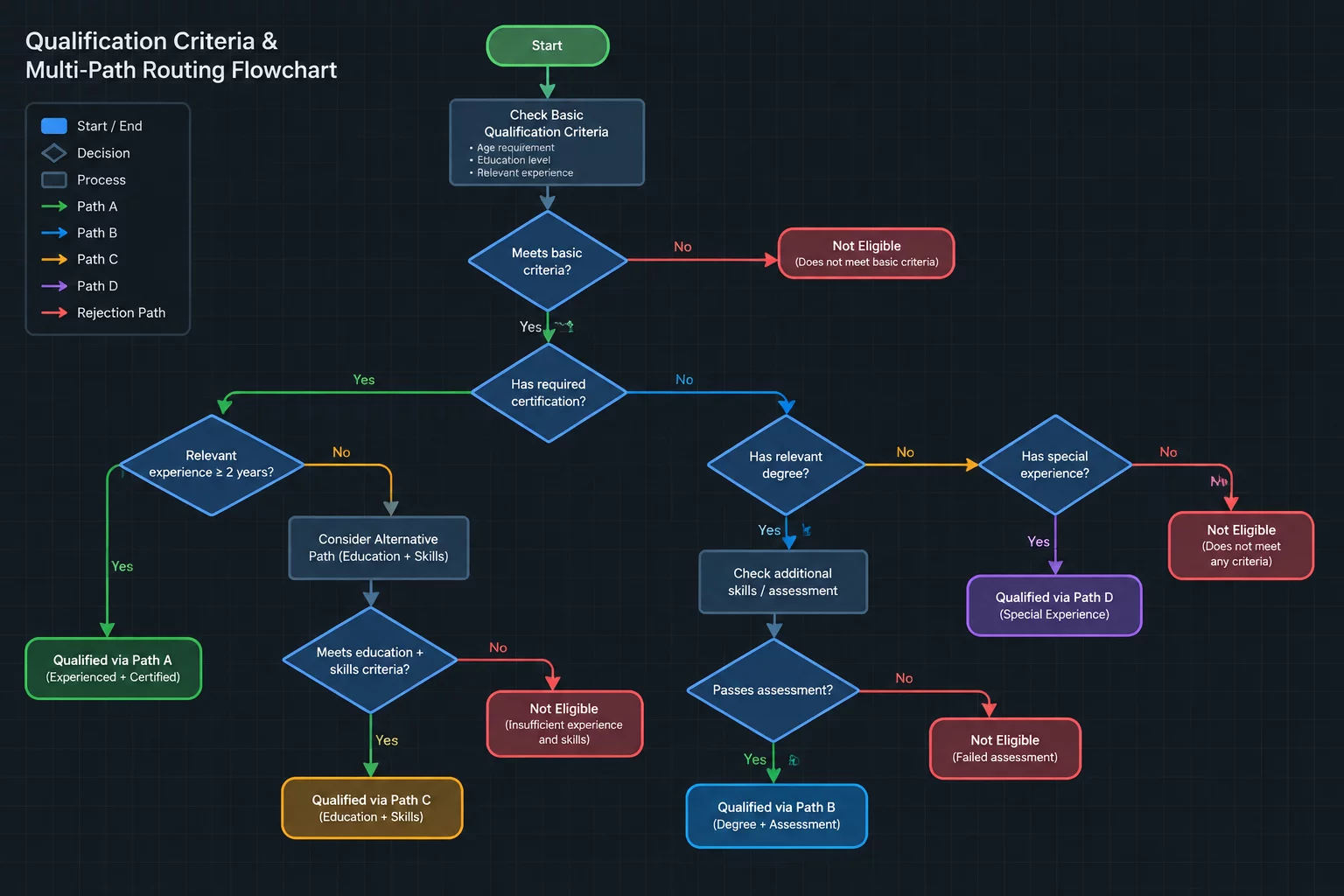
In standard process notation, approval is frequently sketched as a monolithic task box labeled "Manager Reviews Request." This shorthand hides four distinct conditional routes: unconditional approval, conditional endorsement requiring downstream stipulations, rejection with revision rights, and outright dismissal. When these divergent outcomes are bundled into a single rectangular activity, diagram consumers cannot discern who holds signing authority, what triggers alternative paths, or where unresolved cases linger.
During our operational audit across multi-department procurement and compliance chains, teams routinely experienced prolonged verification delays. By replacing subjective narrative steps with explicit decision forks, we uncovered that thirty percent of requests had been stalled due to unclear ownership between secondary reviewers and audit liaisons.
- Split combined approval tasks into distinct diamond decision forks with mutually exclusive outcomes.
- Assign unambiguous role ownership rather than departmental designations to each fork boundary.
- Specify time-bounded fallback branches to resolve non-responsive reviewer deadlocks automatically.
Core Diagnostic Takeaways
Applying structured decision forks to approval architectures yields immediate operational clarity:
- Isolate review decisions from action steps to avoid obscuring condition evaluation criteria.
- Every approval fork requires an explicitly mapped path for conditional approvals and revision cycles.
- Rejoining approved branches back into the main stream must occur only after all prerequisite validation tokens are fulfilled.
02SOLVING THE DUAL-SIGNER SYNCHRONIZATION CONFLICT
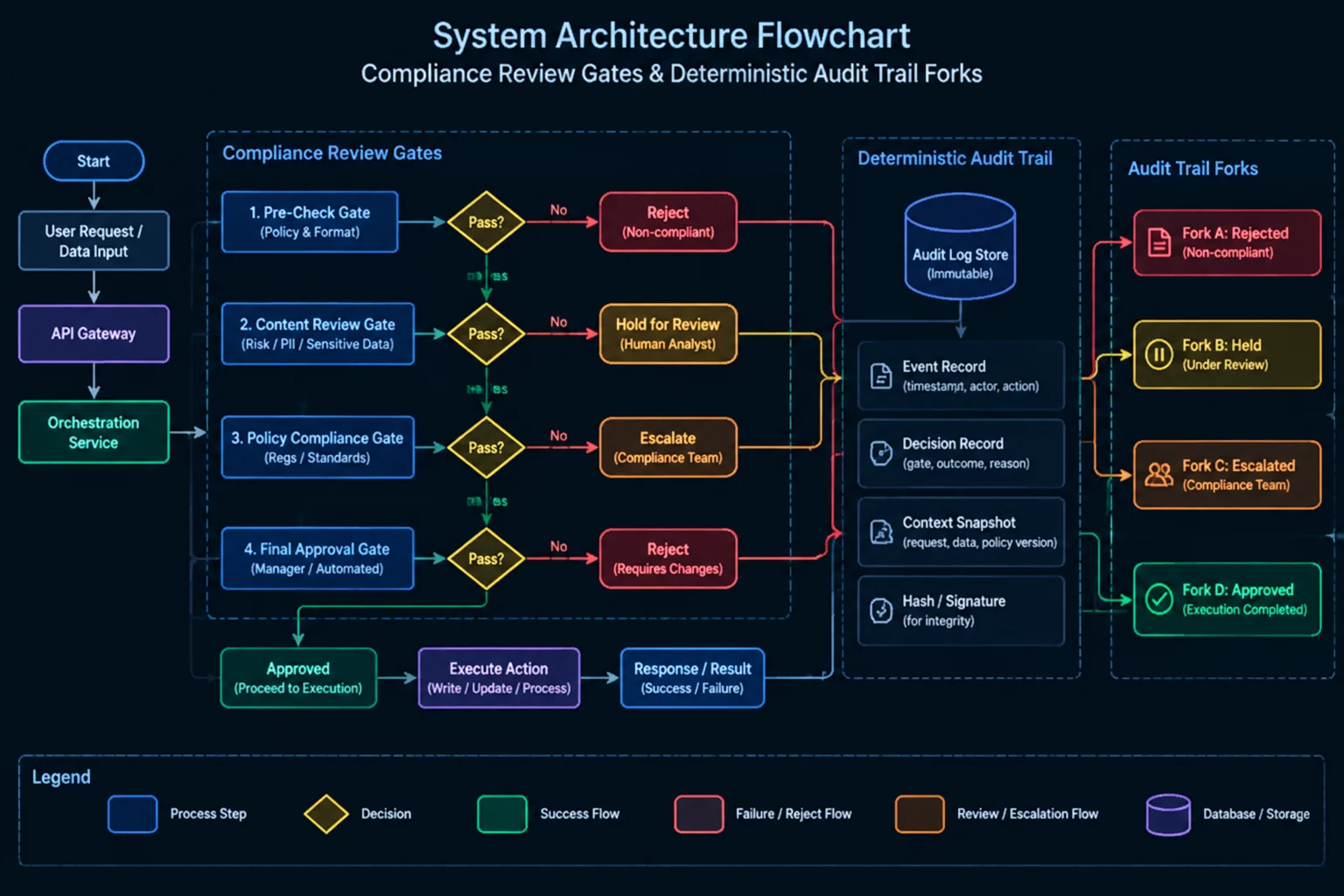
A recurrent vulnerability in multi-tier approvals appears when two parallel authorities must sign off independently. Many system diagrams draw two separate branches that abruptly rejoin without establishing a convergence barrier. If one approver rejects while the second endorses, downstream executors receive conflicting signals. In this case study, we introduced state-holding gate nodes that hold outgoing transitions until both evaluated criteria achieve consensus.
By codifying consensus matrices within the diagram specification, field teams eliminated operational ambivalence. Rejection by either stakeholder now redirects the case to an explicit remediation branch rather than allowing partial approvals to advance into production pipelines unchecked.
An approval step is not an activity in the workflow; it is an irrevocable decision fork that fundamentally dictates the legal and operational lineage of every subsequent task.
Principal Systems Architect
03AUDIT READINESS AND TIMEOUT AUTOMATION
Regulatory scrutiny requires every approval choice to generate an indisputable evidentiary trail. In the revised blueprint, every terminal branch departing an approval diamond logs its criteria parameters, timestamp, and authenticated signature into an immutable event buffer. This documentation protocol ensures compliance teams can verify the exact logic branch traversed during historical audits without manual reconstruction.
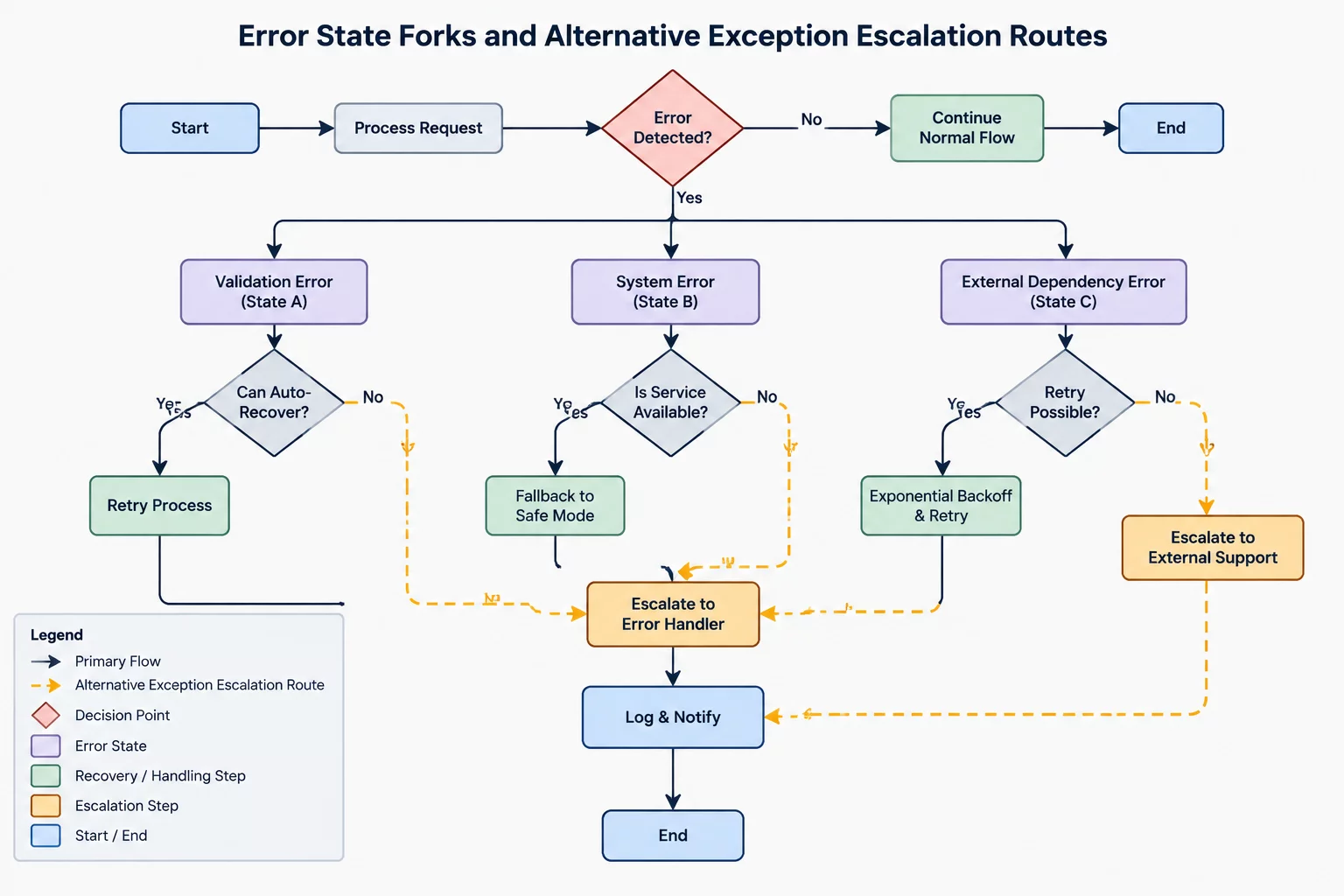
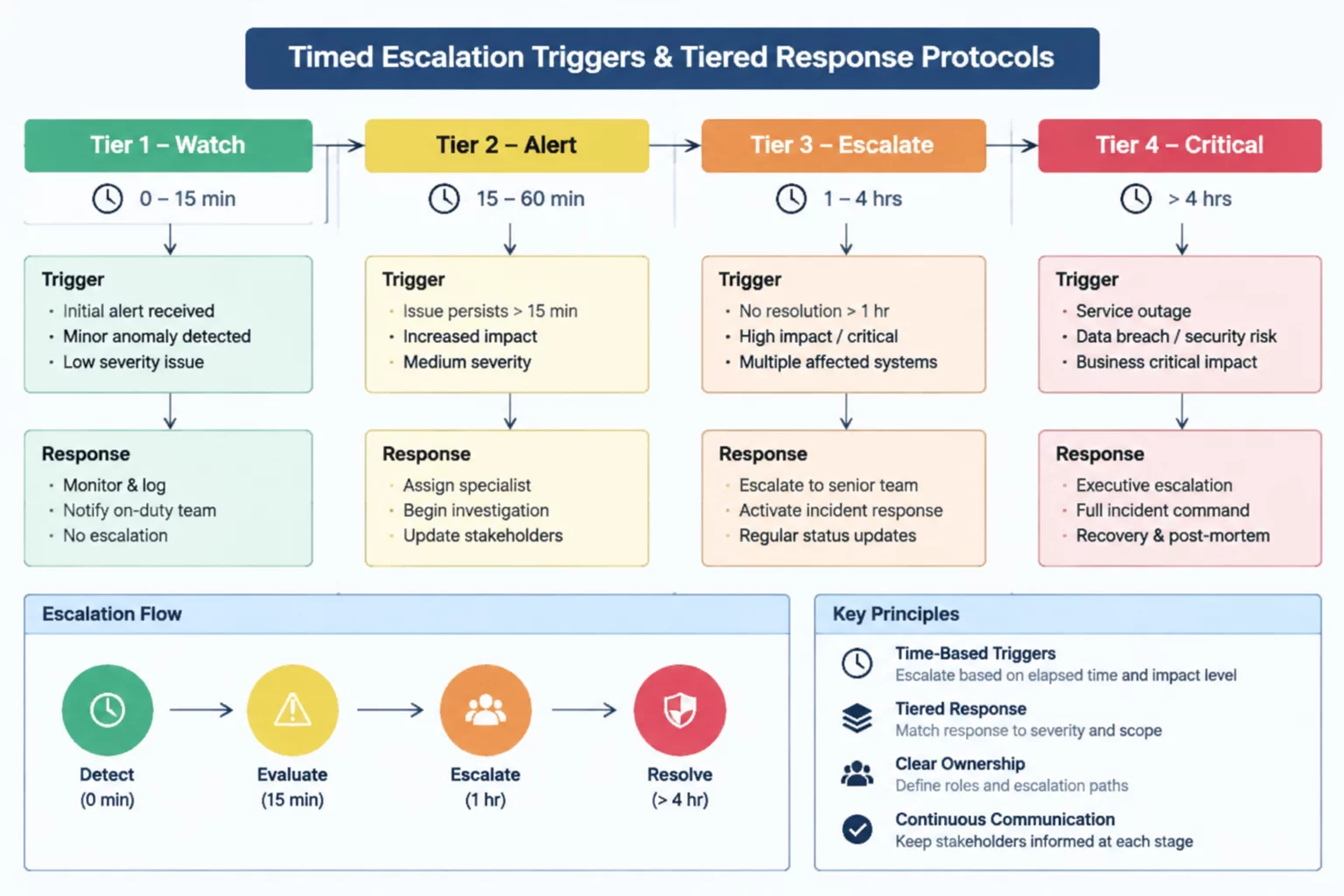
Furthermore, temporal escape hatches prevent cases from languishing in administrative purgatory. When an approver fails to register a deterministic decision within seventy-two hours, the system triggers an escalation branch that reallocates review authority to an accredited delegate, keeping organizational velocity uninterrupted.