01The Failure of Implicit Decision Auditing
Standard system logs frequently track when an action occurs, yet systematically fail to document why an alternative branch was rejected at a critical decision fork.
In this operational scenario, a multi-tier financial approval workflow processed over four hundred high-value transactions daily. When external regulators requested an evidentiary reconstruction of why certain automated exceptions bypassed secondary managerial review, the team discovered that only the terminal execution record had been saved. The intermediate logic gates, evaluation values, and threshold comparisons were silently discarded in ephemeral memory.
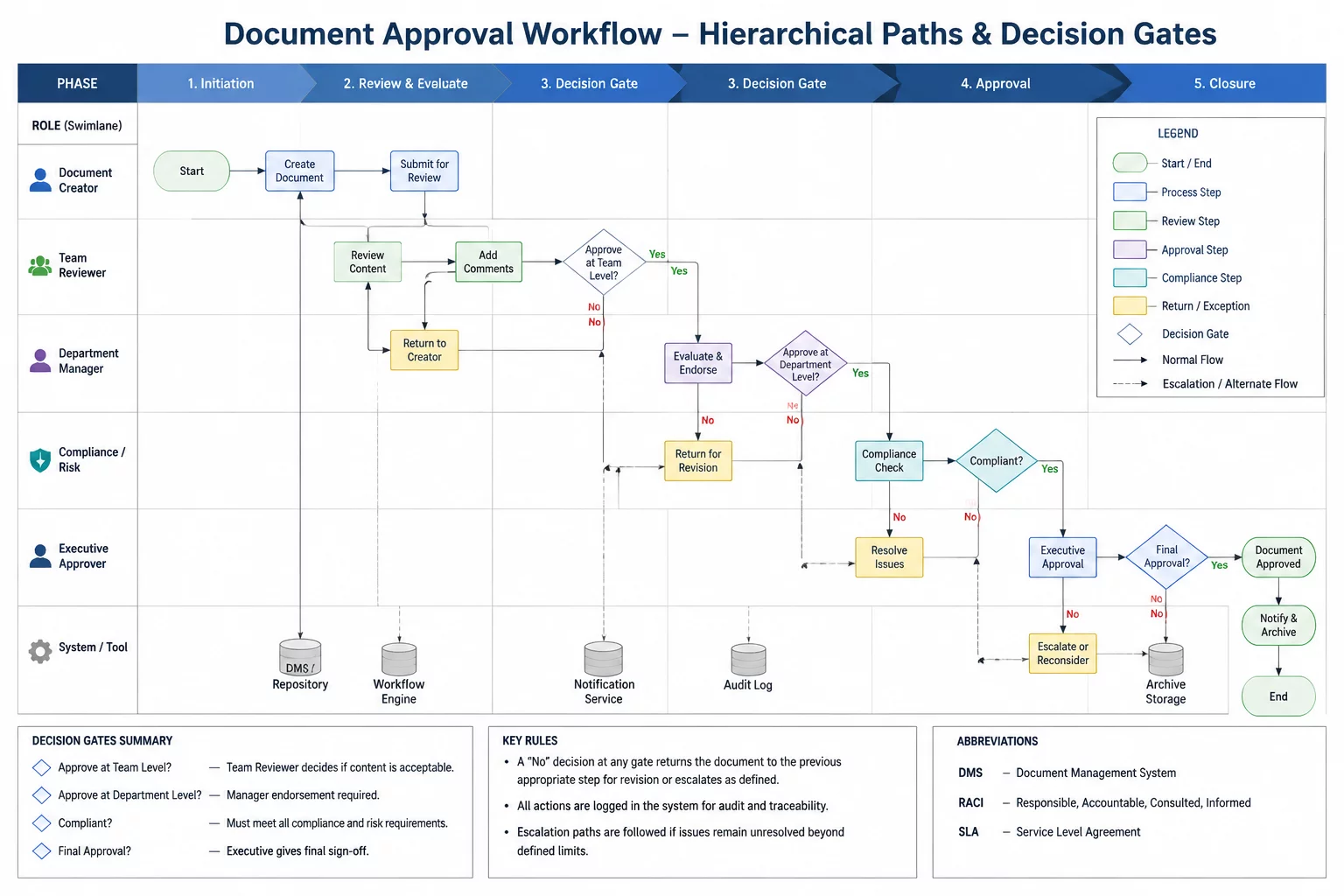
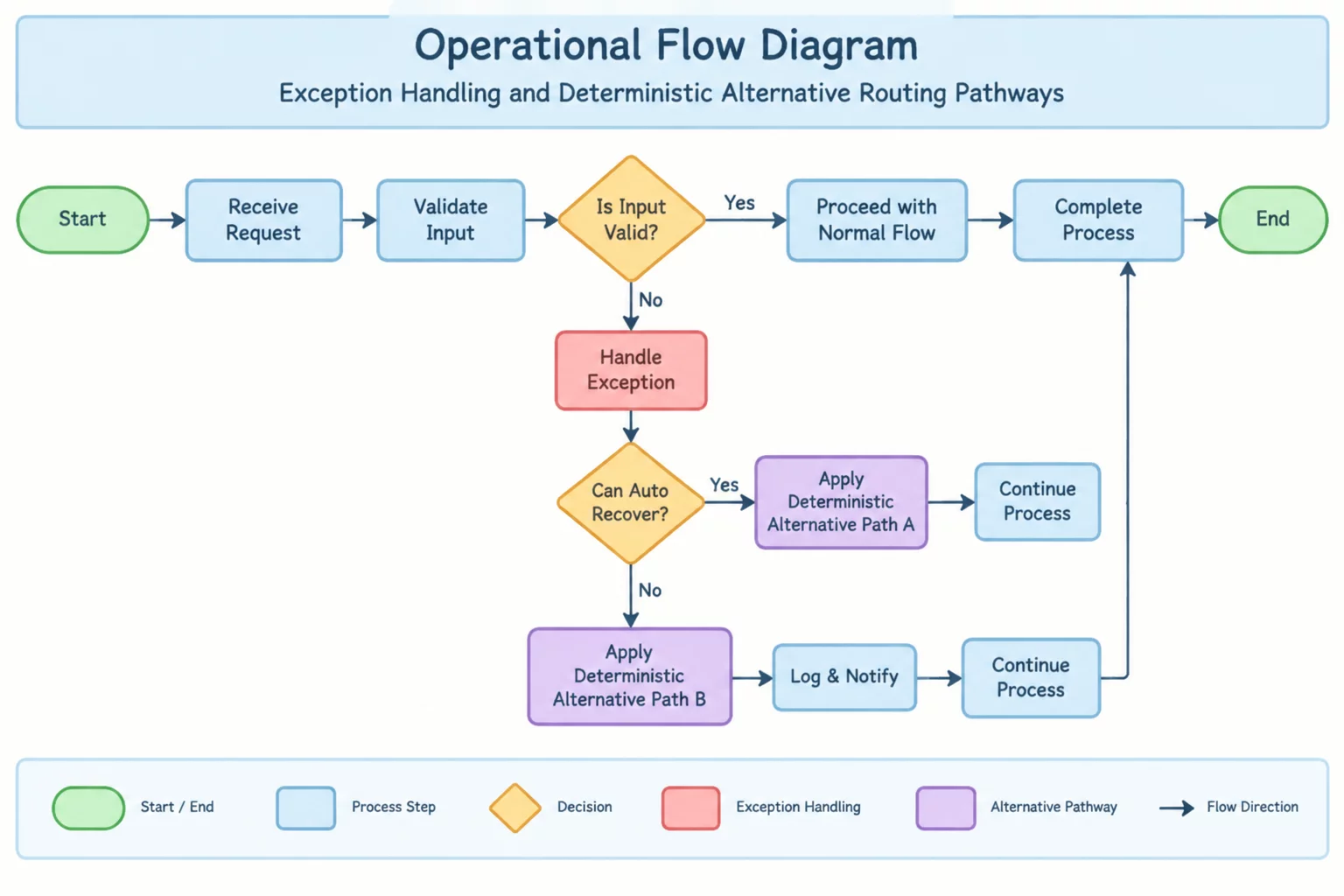
Because the draw.io visual documentation had modeled decisions merely as flow arrows without specifying required logging predicates, engineering implemented basic HTTP transaction status codes rather than forensic decision snapshots. Consequently, forensic analysts encountered three systemic vulnerabilities:
- Absence of decision criteria state capture: When currency variance exceeded thresholds, the system recorded the branch outcome but discarded the fluctuating conversion rates used during evaluation.
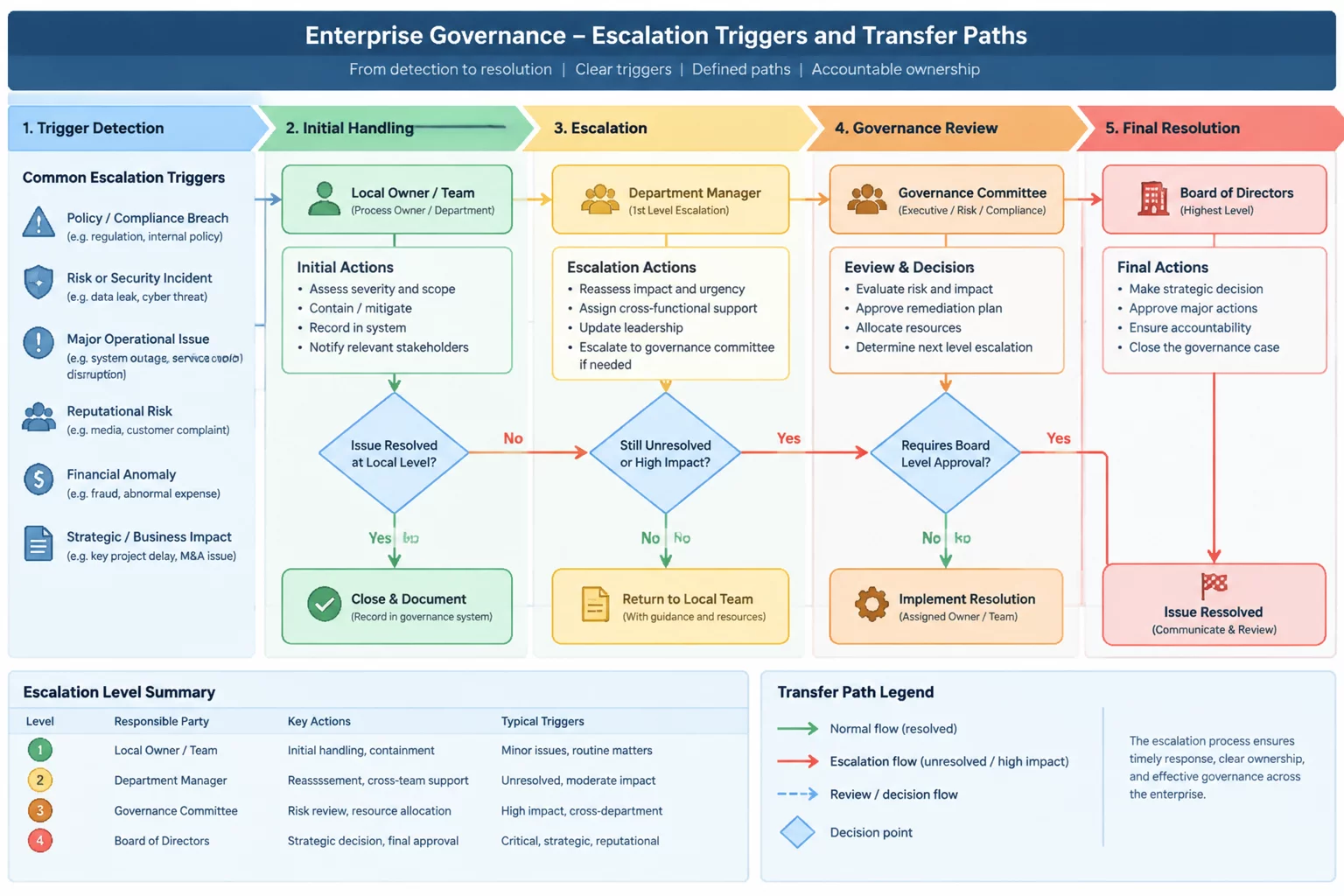
- Ghost overrides in manual handoffs: Supervisory bypasses were executed without recording the authenticating badge ID or the documented justification code.
- Orphaned exception threads: Branch timeouts defaulted to standard fallback paths without tagging the incident in the regulatory audit queue.
Core Audit Architecture Takeaways
Every branching vertex must preserve immutable context rather than relying on terminal database records alone.
- Log the predicate, not just the path: Persist the exact input values and boolean expressions evaluated at each fork diamond.
- Bind user identity to exception thresholds: Manual overrides require dual-token attestation recorded directly in the audit trail.
- Treat visual models as verifiable specifications: Decision forks documented in architectural schematics must explicitly state log schema requirements.
02Re-architecting the Verification Pipeline
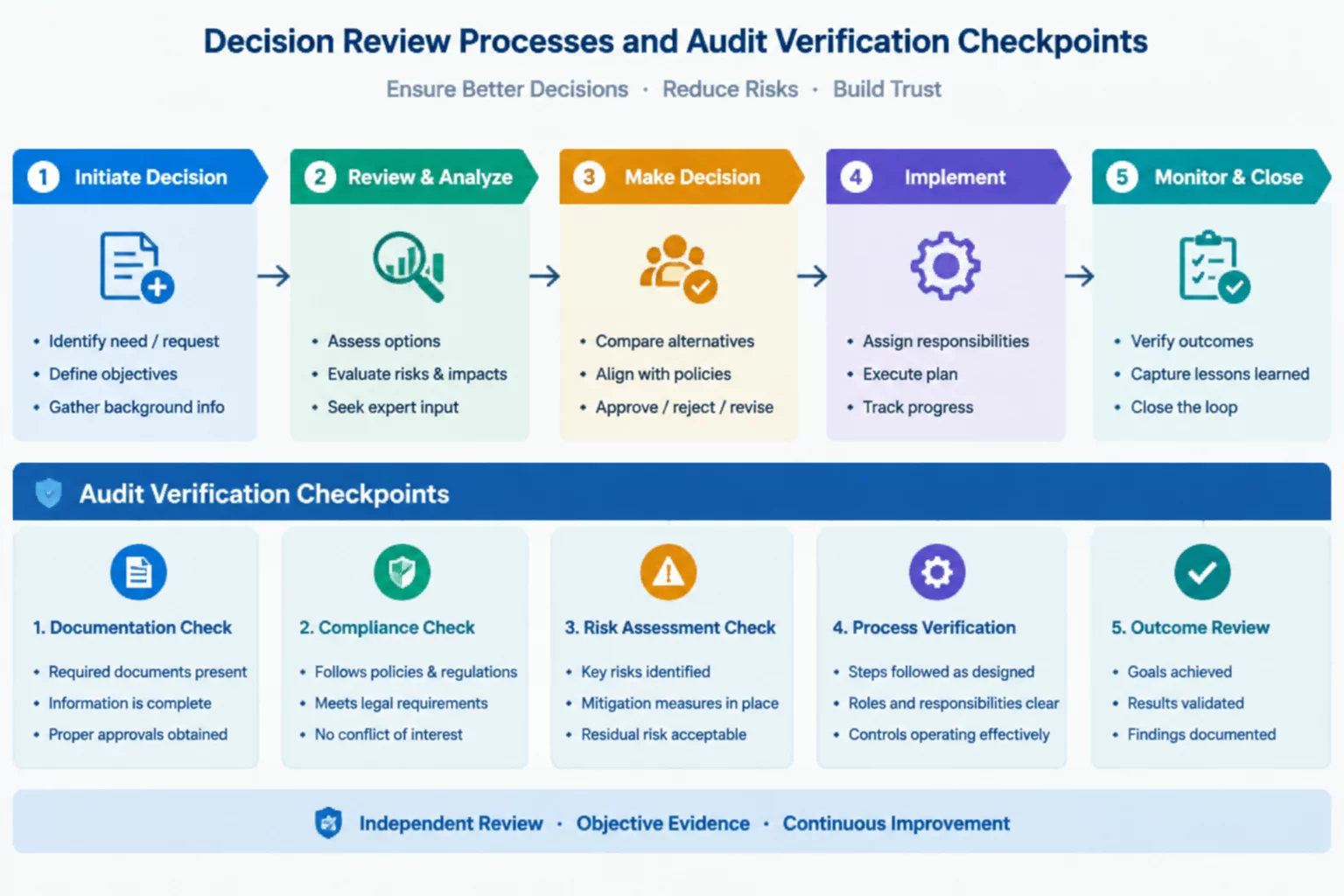
The remediation strategy required decoupling transactional task logs from decision provenance events. Each fork was augmented with an isolated logging event that serializes the decision engine's evaluation context into an append-only ledger prior to routing execution. This architectural separation guarantees that if a process crashes mid-branch, the audit trail retains the exact branch decision intention.
Furthermore, the visual representation in draw.io was restructured to eliminate ambiguous merging pathways. Decision diamonds now specify explicit audit metadata envelopes directly within custom XML properties, enabling static linter tools to verify that every modeled fork maps to an automated logging assertion in code.
An unrecorded decision is indistinguishable from unauthorized execution. True compliance begins when every branch choice leaves an unalterable forensic footprint.
Lead Systems Auditor
03Validation Outcomes and Long-term Observability
Following the deployment of the redesigned audit architecture, full-spectrum regulatory audits achieved zero non-compliance findings over two consecutive quarters. Reconstructing a complex decision trajectory across eight distributed microservices now requires under forty seconds, down from nineteen business hours of forensic log stitching.
Operational teams now treat the decision diagram not as casual documentation, but as an executable contract of compliance. By maintaining strict parity between diagrammed forks and log emitters, the enterprise eliminated undetected logic drift across evolving production services.