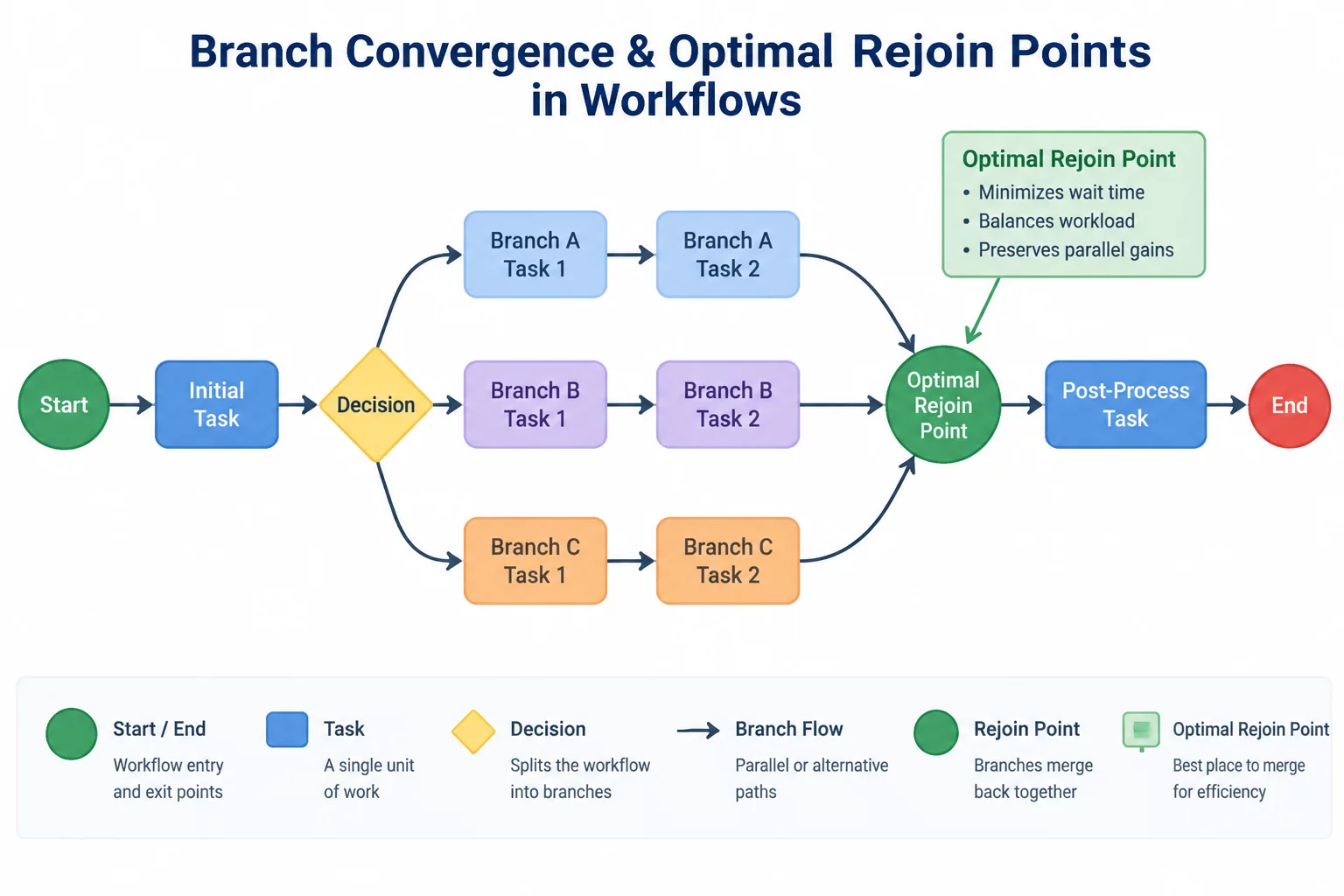
01The Structural Hazard of Premature Rejoining
When workflows fork into independent evaluation tracks, reuniting them without rigorous synchronization creates silent failure states across downstream systems.
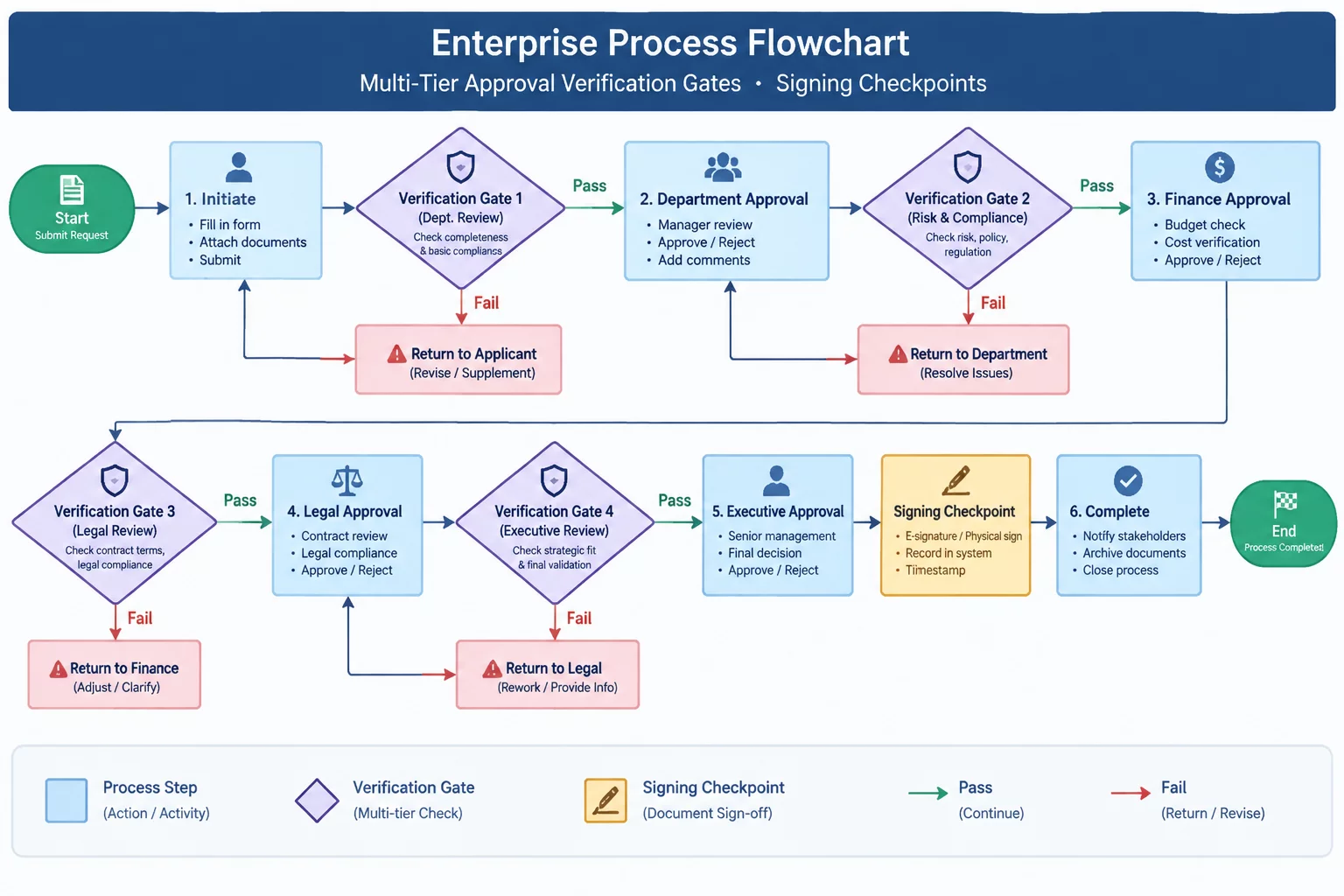
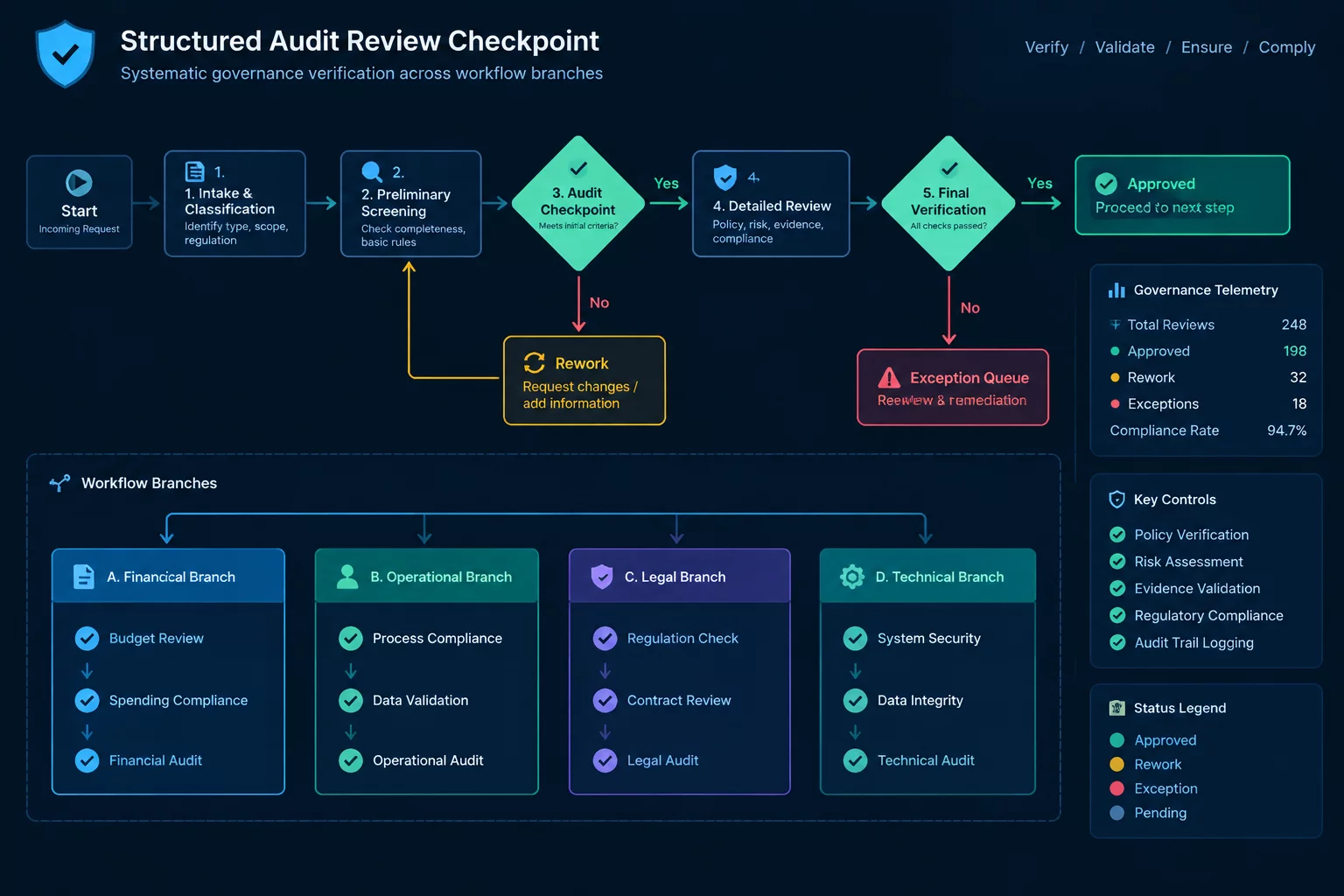
Enterprise underwriting and settlement procedures routinely fragment into parallel streams. One track calculates numerical risk ratios, another verifies sanction lists, a third inspects documentation authenticity, and a fourth schedules fund allocation. In poorly structured draw.io diagrams, these separate branches frequently rejoin into a shared action node the moment any single stream completes. This practice creates severe architectural vulnerability.
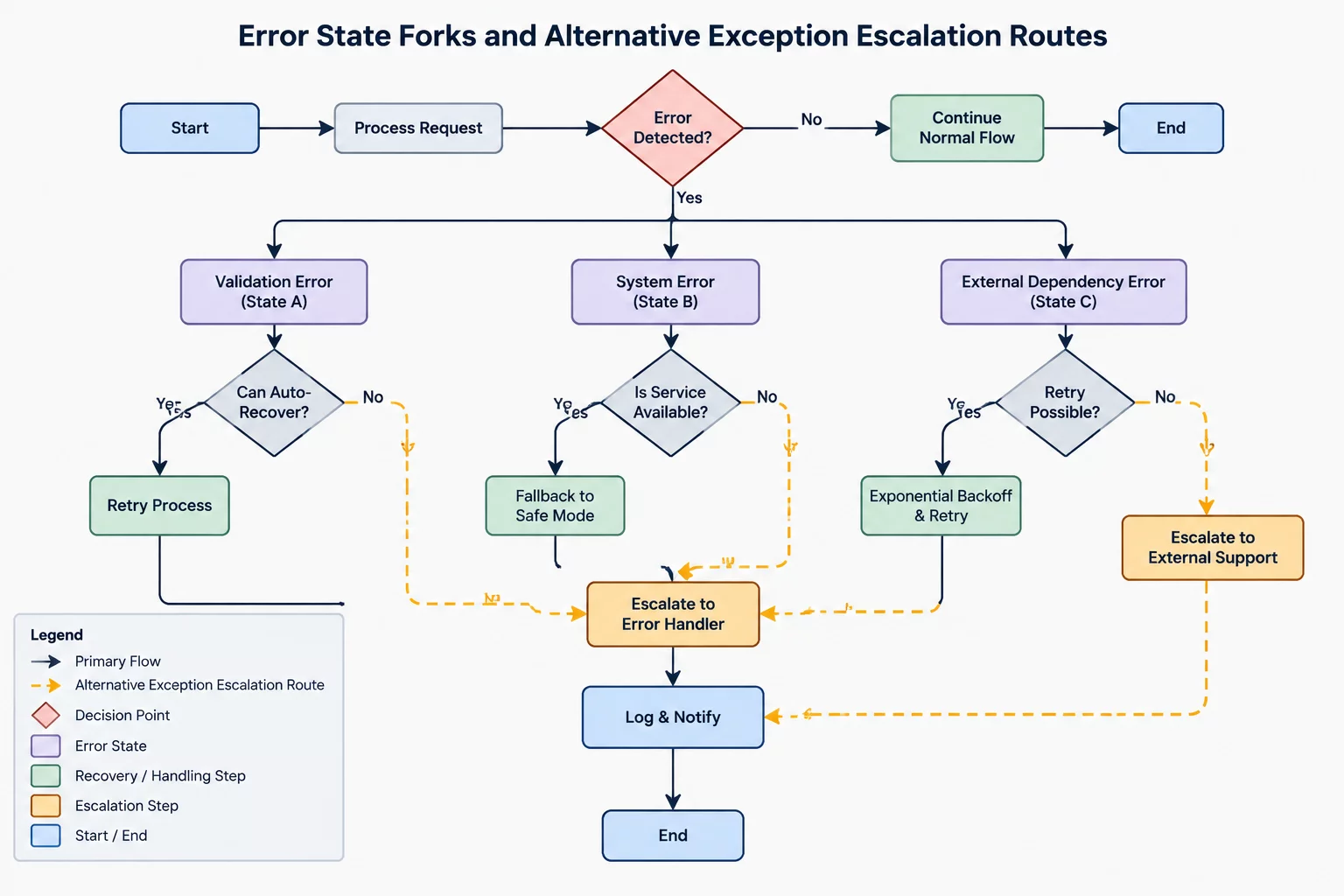
The core danger lies in false state assumption. Downstream software modules assume that reaching the post-rejoin phase implies every upstream check concluded favorably. When paths rejoin prematurely, unvalidated conditions slip through without triggering deliberate error flags or managerial escalation protocols.
- State Contamination: fast branches trigger finalization before slow verification tracks finish validating data.
- Metadata Erasure: branch-specific rejection causes disappear when streams merge into a single status code.
- Audit Fragmentation: compliance teams cannot verify whether an action was authorized by risk analysts or bypass defaults.
Mandatory Confluence Architecture Principles
To preserve systemic integrity across multi-lane operational models, apply these concrete structural standards to every branch merge point:
- Never merge multiple connection arrows directly into an activity shape without a dedicated convergence gateway.
- Define explicit completion predicates for each incoming stream prior to downstream trigger activation.
- Retain origin-branch tags within the composite data payload to support post-incident analysis.
02Field Dissection: The Unsynchronized Lending Pipeline
A major commercial lending deployment processed over 1,200 facility requests monthly through an automated workflow. The diagram documented two parallel approval tracks: Credit Committee Endorsement and Collateral Lien Verification. Both streams directed their completion arrows into a single task node titled Issue Disbursement Letter.
Because the diagram utilized an ambiguous visual join without gateway semantics, the development team implemented an OR-condition instead of a strict AND-synchronization. If the credit committee entered an early approval, the system issued disbursement letters while collateral verification was still flagged as pending. Eighty-four loans disbursed before a routine credit audit halted operations. Reworking the diagram with synchronized rejoin gates stopped the leakage immediately.
Connecting two lines into one task node without an explicit join predicate is not a minor diagram oversight. It is an undocumented assumption that inevitably turns into an uncontrolled production failure.
// Lead Workflow Architect
03Establishing Deterministic Join Semantics in draw.io
Remediating this pattern requires replacing direct line junctions with explicit decision confluence nodes. In draw.io, authors should configure dedicated join diamonds and populate shape data properties with synchronization requirements: total incoming branches, quorum thresholds, and timeout fallback directives.
By enforcing precise boundary markers where parallel processes terminate, teams establish clear handoffs between visual documentation and technical implementation. Systems engineers no longer have to guess process intentions, and compliance auditors gain unambiguous verification checkpoints across the operational lifecycle.