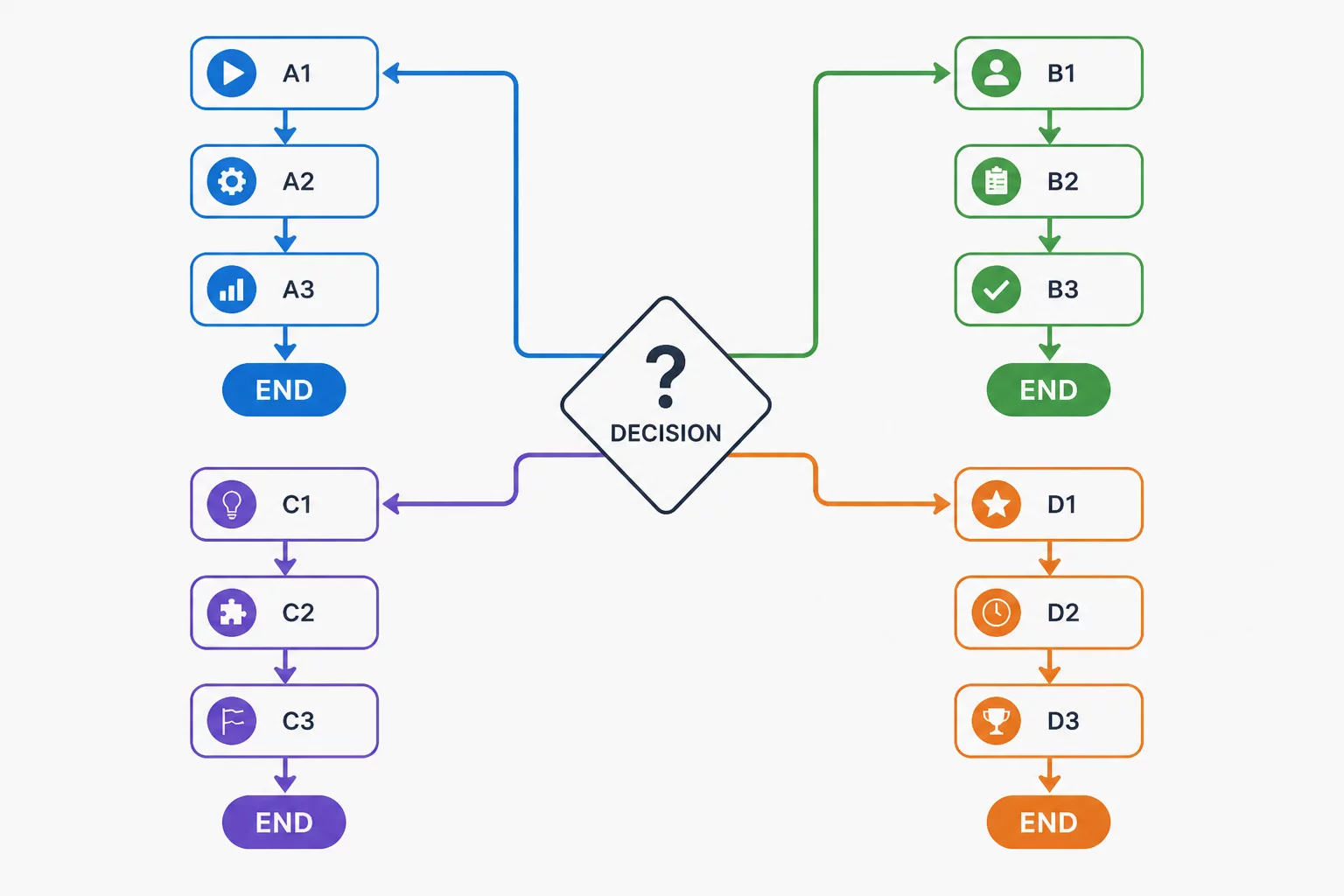
How Business Logic Escapes Into Freeform Notes
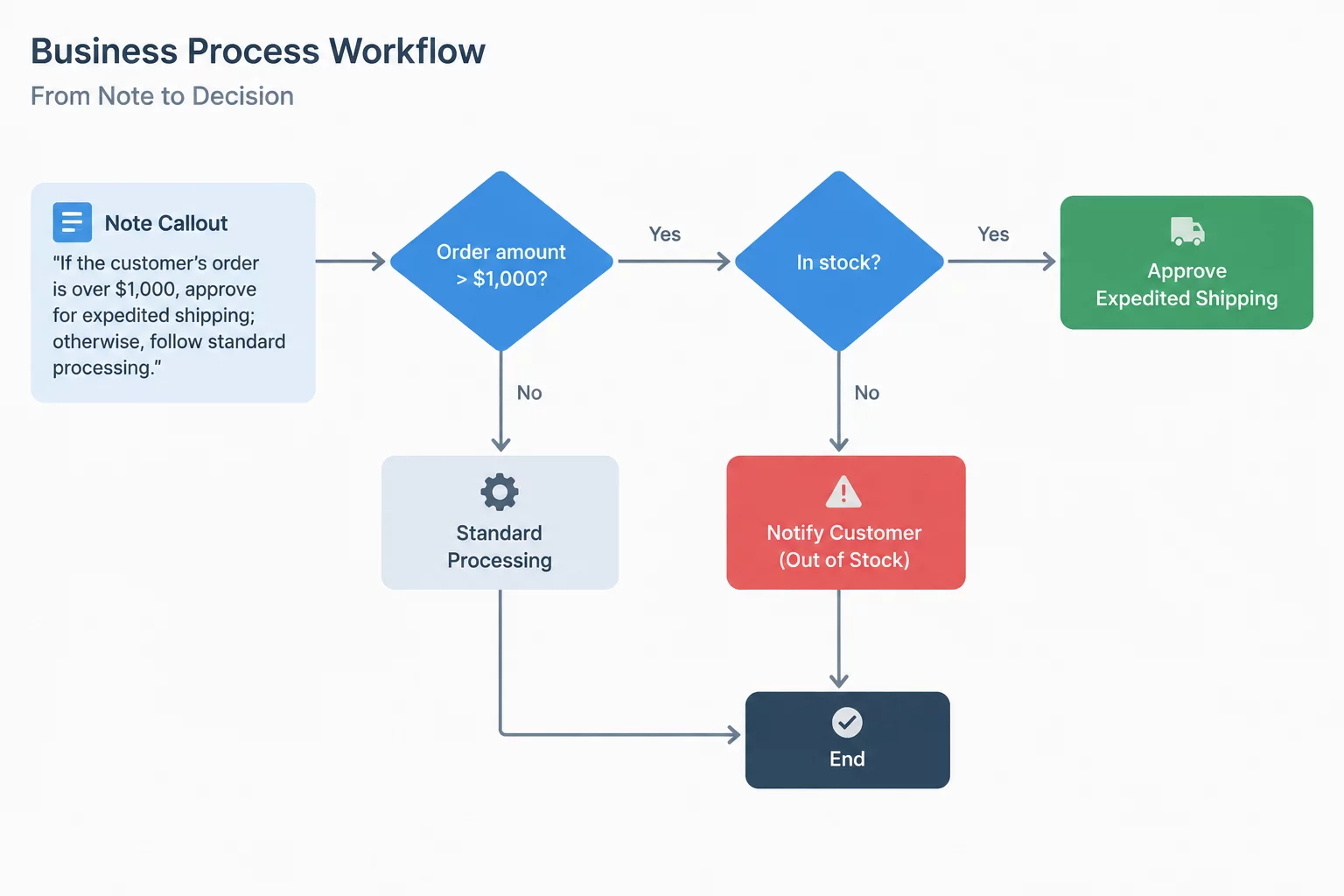
Process diagrams frequently begin with pure intentions: a clean sequence of action blocks connecting input to final delivery. Over time, engineering edge cases and regulatory exceptions accumulate. Instead of redrawing the flow grid or establishing formal branching pathways, authors drop a casual yellow sticky or side annotation next to an action step: "Only apply discount if account tenure exceeds eighteen months and balance is above threshold." This casual text note appears harmless during visual inspection, yet it conceals critical routing logic from automated analysis and operational compliance.
When logic lives in text boxes rather than standardized decision diamonds, diagram interpreters treat the pathway as linear. Operators following runbooks read the instructions inconsistently, creating bifurcated outcomes that no system monitors. In draw.io, notes often float as unstructured labels or unlinked text blocks. They lack outgoing connector anchors, meaning downstream actions never register as dependent on conditional checks.
During a recent enterprise billing audit, three critical compliance waivers rested entirely within parentheses inside a single note block attached to an invoicing node. Downstream billing agents interpreted the clause differently across regional offices, generating millions in unreconciled discounts before anyone realized the process diagram failed to dictate a deterministic exit path.
Why Analysts Hide Conditions in Annotations
Workflow designers rarely hide conditions deliberately. Instead, organizational friction, canvas constraints, and hasty revisions push complex multi-variable criteria into peripheral text elements. Three recurring factors drive this pattern:
- Visual canvas congestion: Designers avoid adding decision diamonds because splitting lines requires moving dozens of connected rectangular blocks.
- Unclear rule ownership: Business stakeholders provide conditional rules without identifying which operational role enforces or verifies the threshold.
- Compound logical statements: Rules involving boolean combinations (AND, OR, NOT) feel too complex for simple visual bifurcations, so analysts summarize them as explanatory text.
Text annotations bypass visual linting tools. While connected connectors and nodes can be parsed by workflow parsers or schema validators, freeform notes exist as disconnected metadata. To guarantee process integrity, diagrams must enforce zero unanchored conditional statements across all published architectural baselines.
Extracting Hidden Rules into First-Class Decision Diamonds
Eliminating hidden conditions requires a methodical extraction protocol. First, isolate every annotation attached to an action block and scan for modal operators such as "unless," "only if," "except when," or "where applicable." Each of these trigger phrases indicates an unmodeled condition that must become an independent decision diamond.
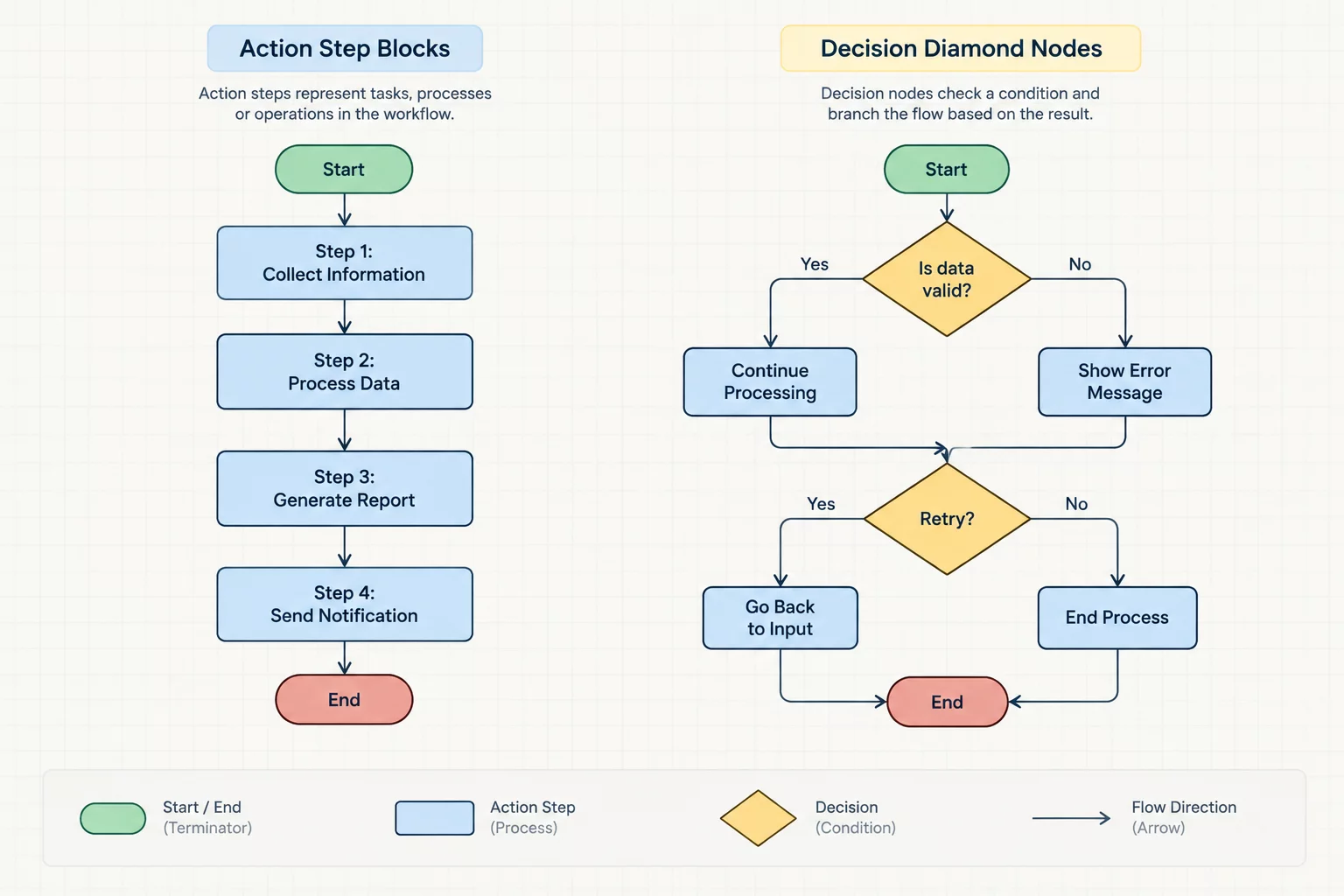
When breaking compound text notes into formal forks, decompose compound statements into sequential or parallel decision diamonds. If a note states "Escalate to tier two if transaction exceeds $10,000 or customer is international," create two dedicated decision diamonds in draw.io with explicit yes/no exits. This visual clarity ensures every scenario has an assigned handler, an explicit audit log, and unambiguous routing.
Establishing Review Checkpoints and Canvas Linting
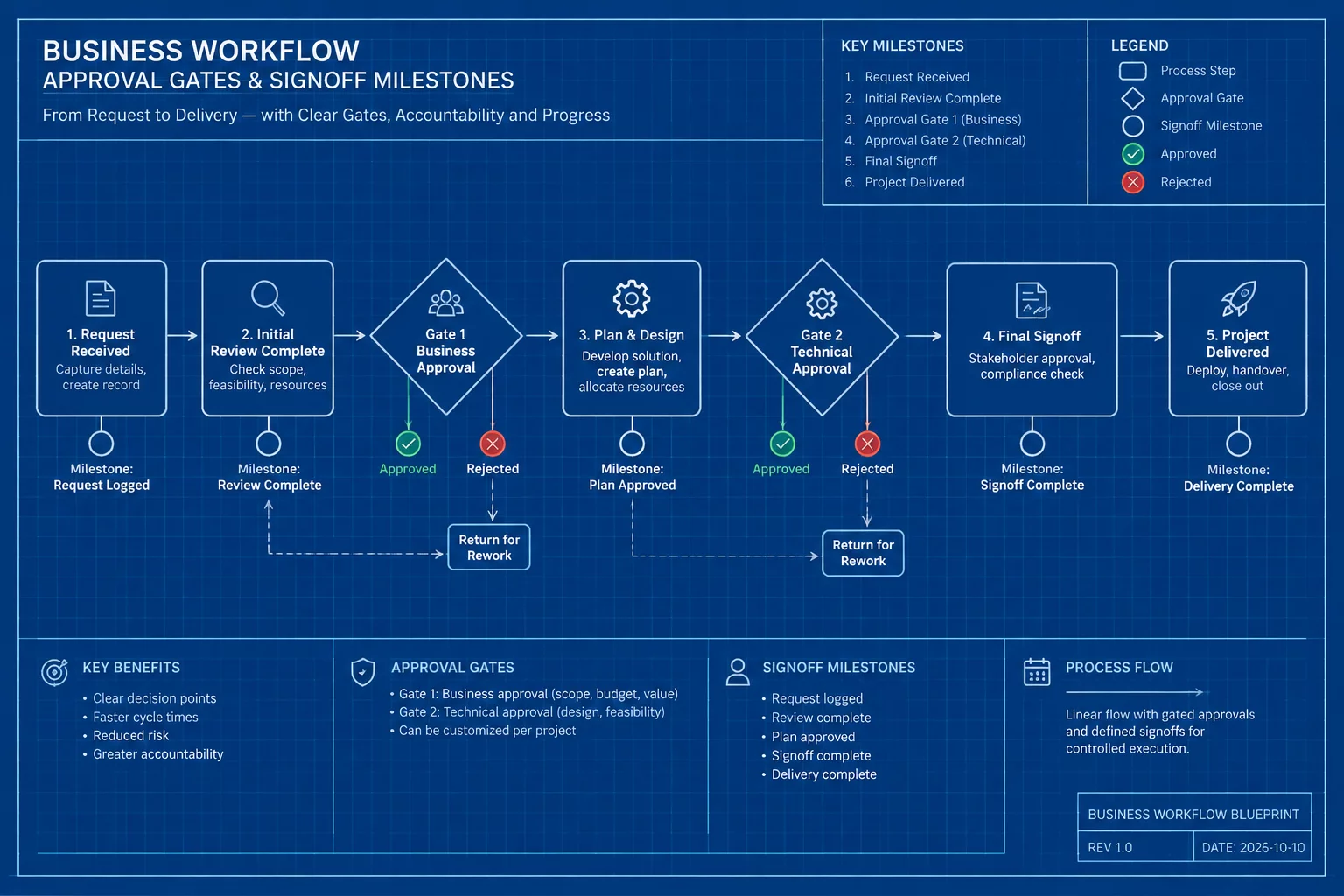
Sustained architectural clarity requires formal review gates before any diagram promotion to production status. Implement diagram peer reviews where reviewers specifically flag notes containing conditional keywords. In draw.io workflows, utilize metadata tags and shape styling that designate yellow text shapes exclusively for non-binding commentary, strictly forbidding algorithmic constraints within them.
By enforcing strict bifurcation standards, teams transform passive documentation into deterministic blueprints. Operational teams resolve cases faster, compliance audits pass without interpretation disputes, and automated pipeline generators can translate draw.io charts directly into production orchestration engines without hidden logic traps.