The Anatomy of Conflated Workflow Steps
When analysts draft operational diagrams, they naturally gravitate toward rectangular action boxes because tasks feel tangible. A typical node frequently reads "Review and approve customer intake packet". While this phrasing appears clean to outside observers, it quietly binds an effort-based operation—assembling documentation—with an authoritative fork in routing—granting or denying approval. The resulting visual flow looks wonderfully tidy while obscuring the governing criteria.
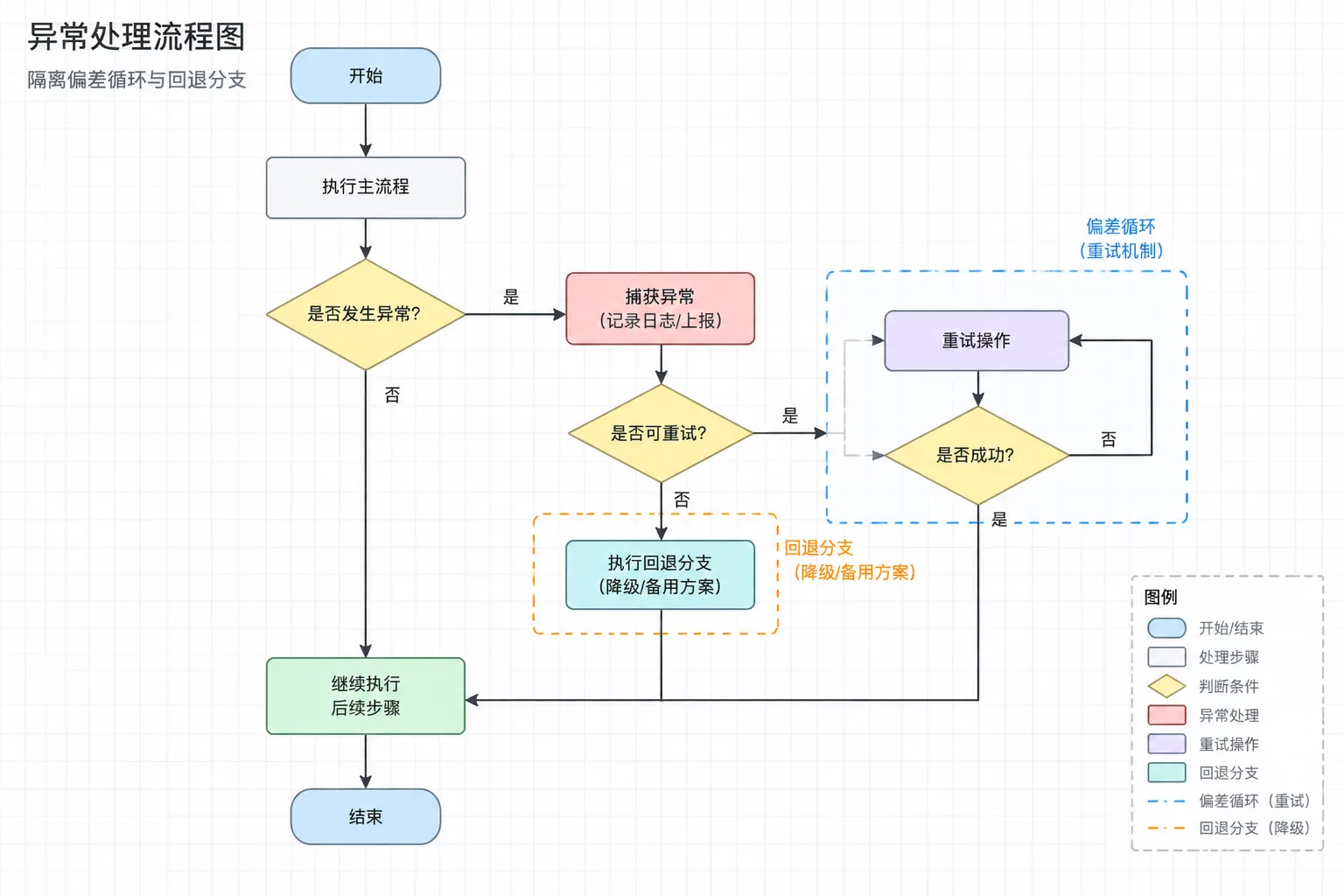
Downstream operators inevitably hit turbulence because the flowchart offers only a single forward transition. When an intake packet fails validation, workers must formulate an undocumented workaround on the spot. The process chart promises smooth linear movement while reality demands an unmapped triage branch.
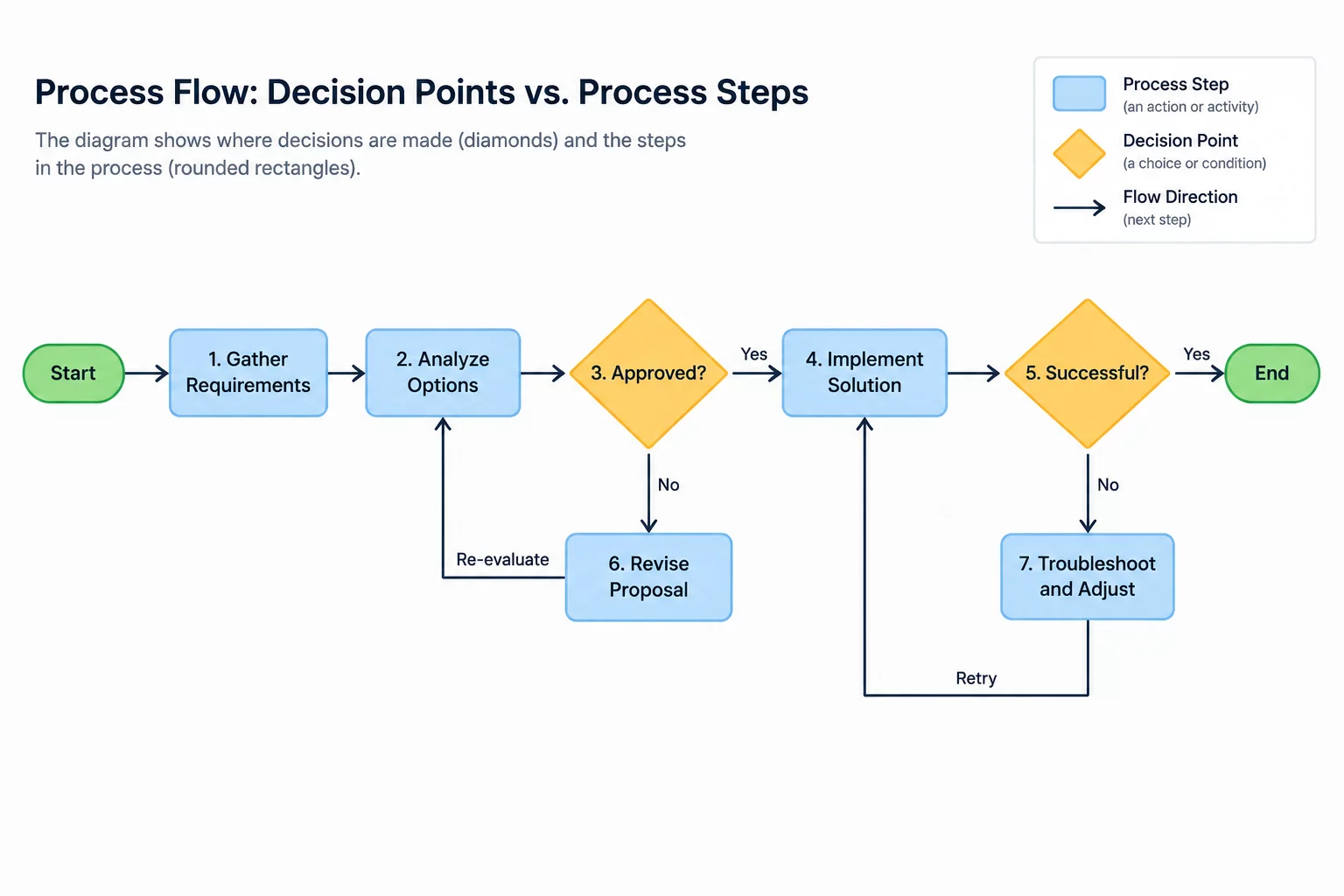
Untangling this flaw requires auditing each task node across the diagram canvas. If a step determines subsequent direction rather than merely producing an output, that step must be dissected into an operational step and an autonomous decision gate.
Why Action-Heavy Diagrams Break Under Pressure
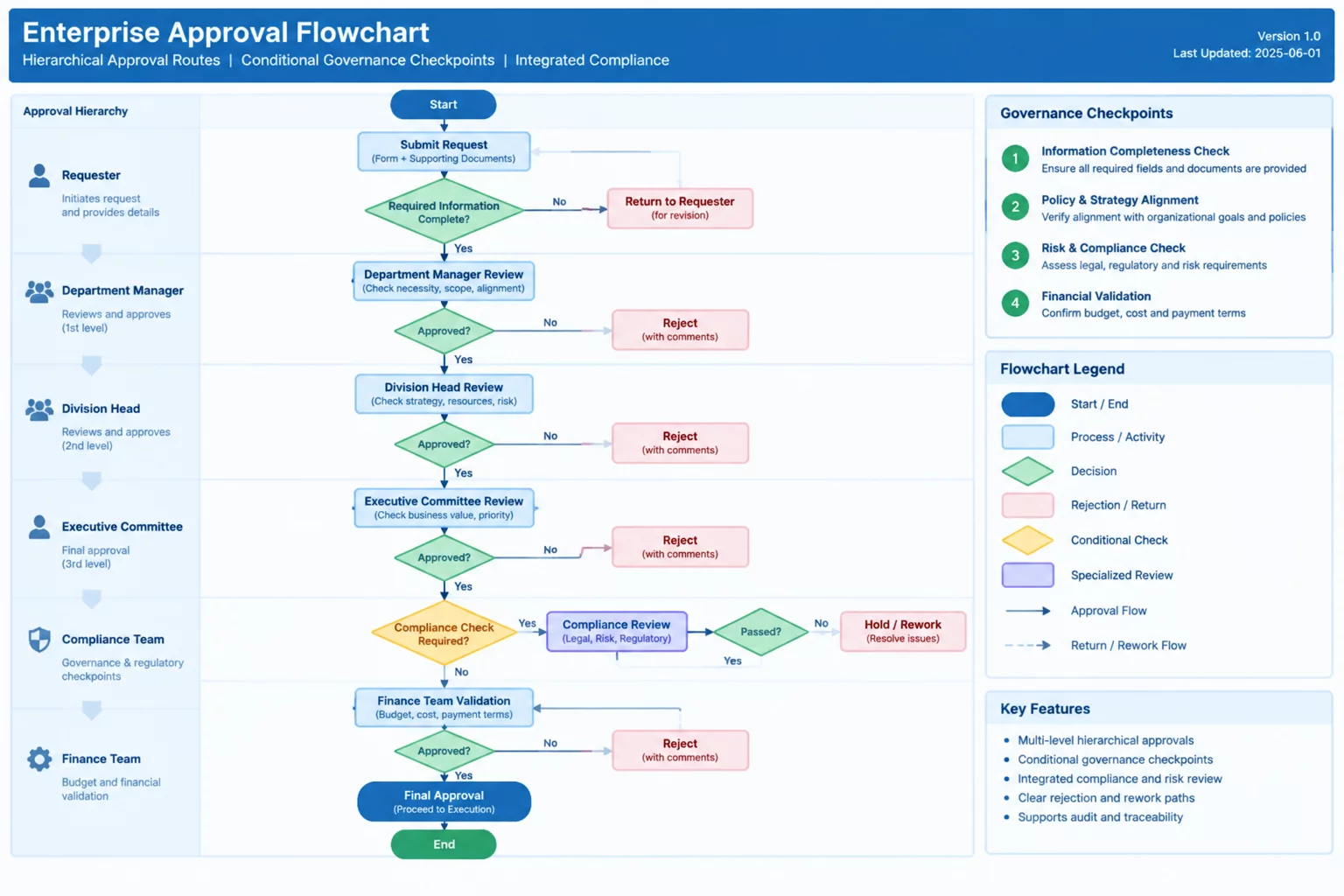
When decision diamonds are omitted in favor of simple sequential rectangles, organizations experience immediate friction across engineering and audit layers:
- Incomplete Compliance Audits: Independent reviewers cannot verify whether an outcome resulted from regulatory validation, managerial discretion, or default platform behavior.
- Proliferation of Shadow Procedures: Edge-case rejections without diagrammed exit points force operational staff to write unofficial cheat sheets.
- Automation Misalignment: Software architects converting workflow charts into executable state machines encounter invisible routing forks, forcing costly refactoring cycles.
The core issue is not a shortage of operational details; it is the conceptual blending of task execution with state verification. Action blocks consume person-hours and modify records; decision nodes inspect existing state without performing transactional mutations.
Decoupling Execution Tasks From Gate Criteria
To eliminate ambiguous blocks, system designers must apply a strict separation method. First, isolate the preparatory action that compiles data fields into an artifact. Second, follow it with an explicit decision diamond that tests that artifact against defined boundary values.
Isolating the decision gate instantly reveals missing exception pathways. The diagram designer can now clearly represent what happens when verification fails, who handles escalation, and how repaired records merge back into standard processing.
Standardizing Decision Verification Across Teams
Maintaining workflow rigor over time requires continuous schematic governance. Engineering review committees should institute a diagram linting rule: any operational box leading to multiple informal results must be split before sign-off.
Separating operations from gating choices turns everyday flowcharts into dependable blueprint documents. They stop serving as superficial summaries and become rock-solid foundations for operational automation, compliance certification, and system engineering.