The Illusion of Linear Approval Steps
Enterprise workflow diagrams frequently render an approval as a single rounded rectangle labeled 'Manager Approves Request'. When a designer places that rectangle between 'Submit Form' and 'Provision Access', the model assumes an unbroken linear flow. Every operational step before it moves straight through, giving the false impression that approval is a foregone conclusion rather than an evaluative gate with non-binary consequences.
This visual simplification strips the workflow of real-world branching dynamics. Because no secondary edge departs from the rectangle, business teams fail to formulate instructions for denied requests, conditional deferrals, or silent escalations. The diagram shows how things should proceed on a sunny day, completely ignoring what happens when authorization stalls or fails.
When automated systems implement such diagrams, software developers often hardcode default assumptions to make up for the visual omission. They route rejections to generic error handlers or leave requests in permanent limbo because the model provided no designated exit path.
Architectural Failures of Flat Step Representation
Treating approval as a passive step violates core workflow engineering principles. The breakdown manifests in three predictable failure states across operations and compliance testing:
- Unhandled Rejection Traps: When a reviewer rejects an item, the operational system lacks instructions for notifying stakeholders, releasing pre-allocated resources, or triggering dispute resolutions.
- Missing Time-to-Decide Escalations: Rectangles cannot naturally display asynchronous time constraints. As a result, timeout parameters, auto-delegations, and manager inactivity alerts remain unmapped.
- Audit Trail Invisibility: Regulatory compliance reviews require precise logs of who held the authority, which criteria governed their assessment, and what evidence supported their determination.
In high-stakes financial operations or IT security provisioning, these gaps create severe vulnerabilities. Requests sit unattended without alerting supervisors, and rejected applications leave orphaned records in database tables because nobody designed the disposal route.
Deconstructing the Gate into Explicit Forks
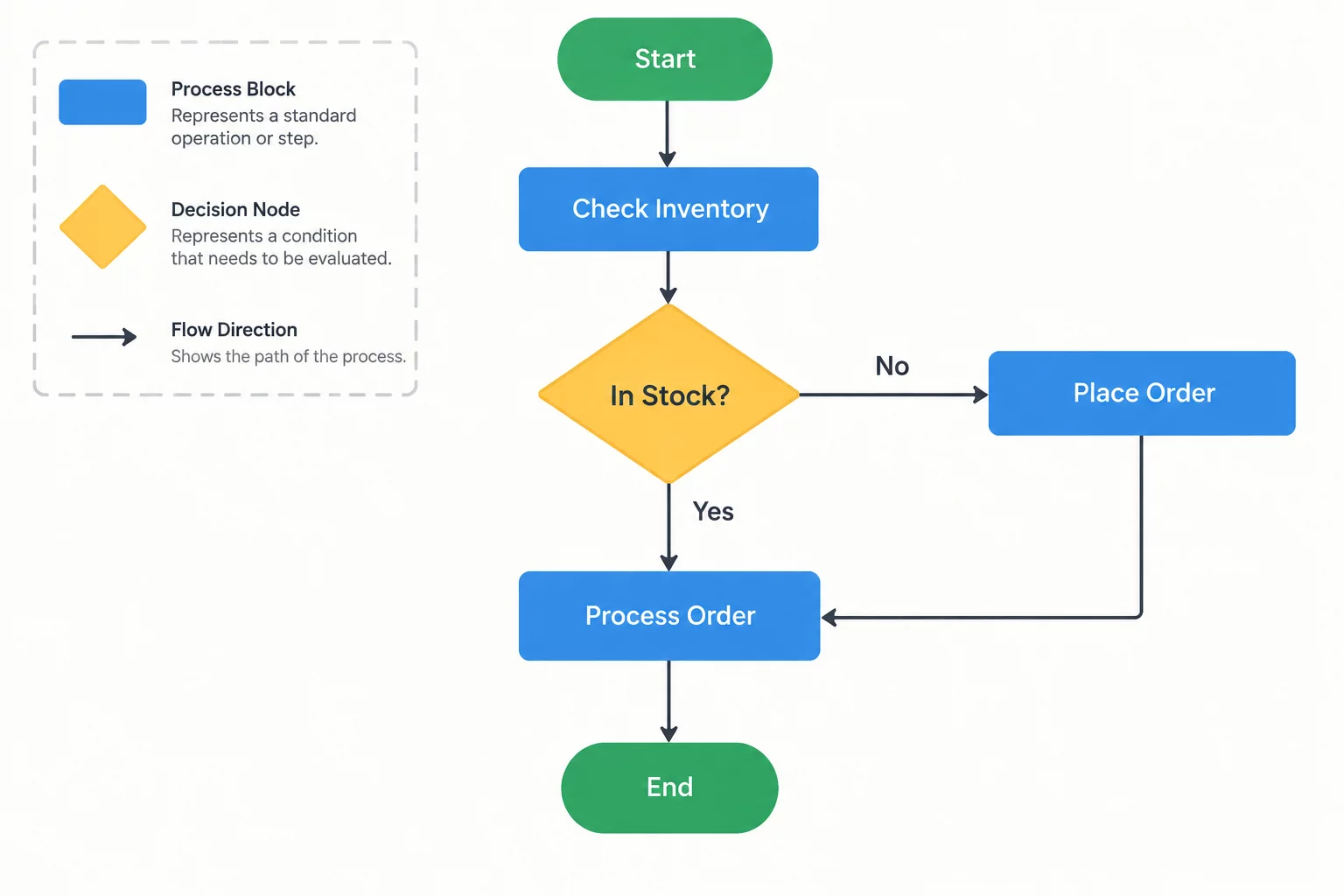
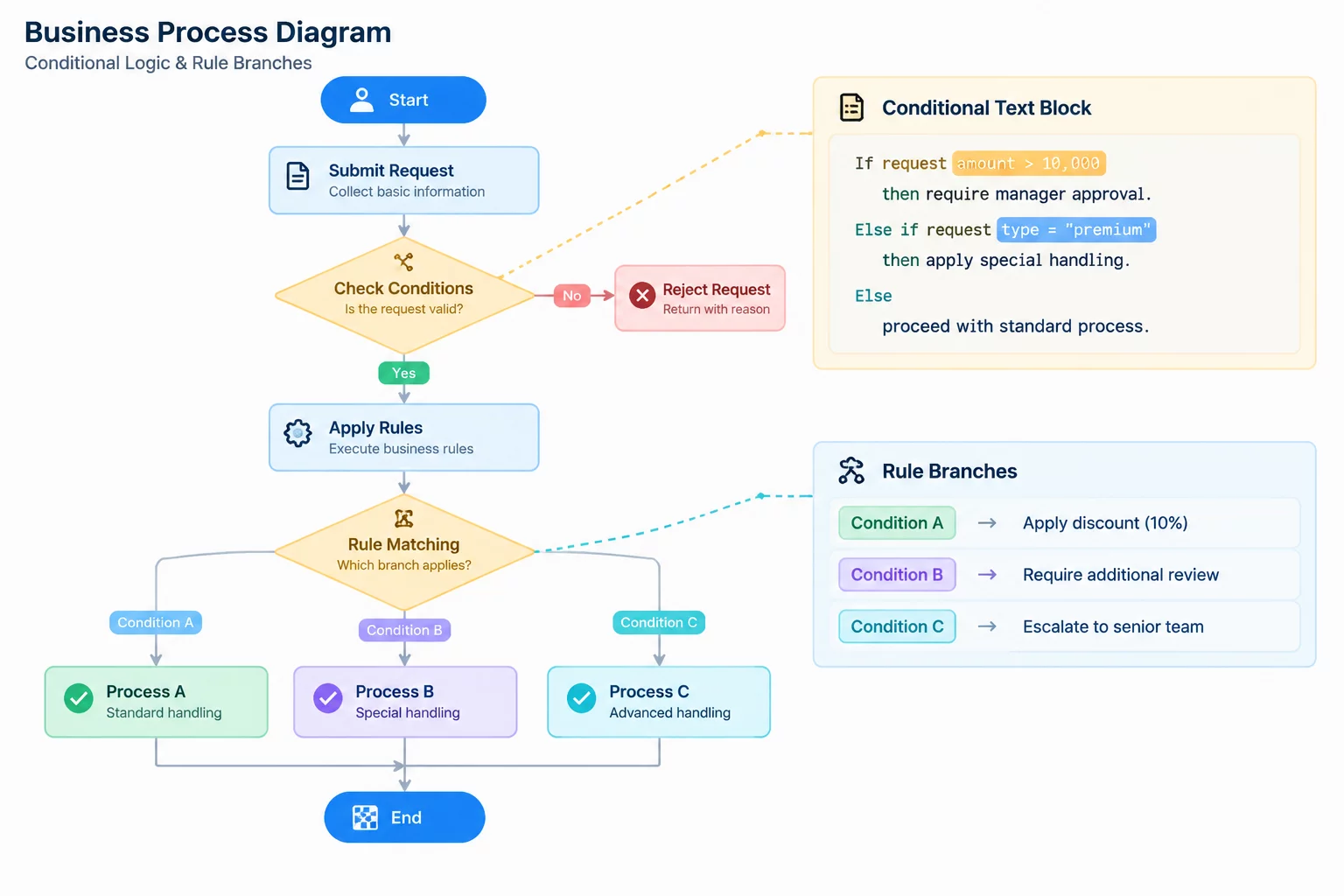
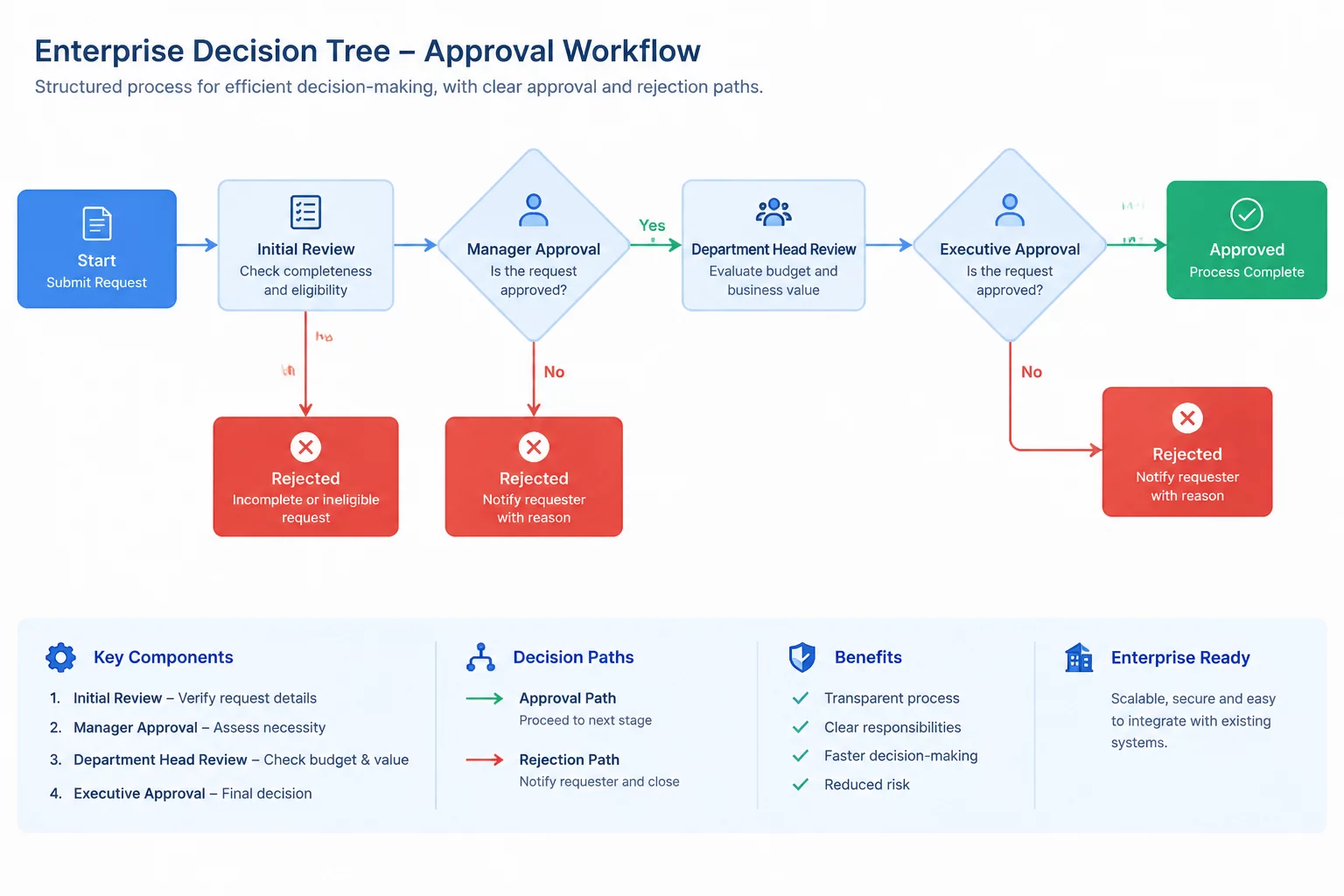
To resolve this anti-pattern, the diagram designer must replace the task rectangle with a dedicated decision diamond accompanied by explicit outbound branches. The diamond represents the evaluative threshold, requiring clearly stated criteria such as 'Authorization Criteria Satisfied?'. From this fork, two primary vectors must emerge with distinct labels: an affirmative path and a negative path.
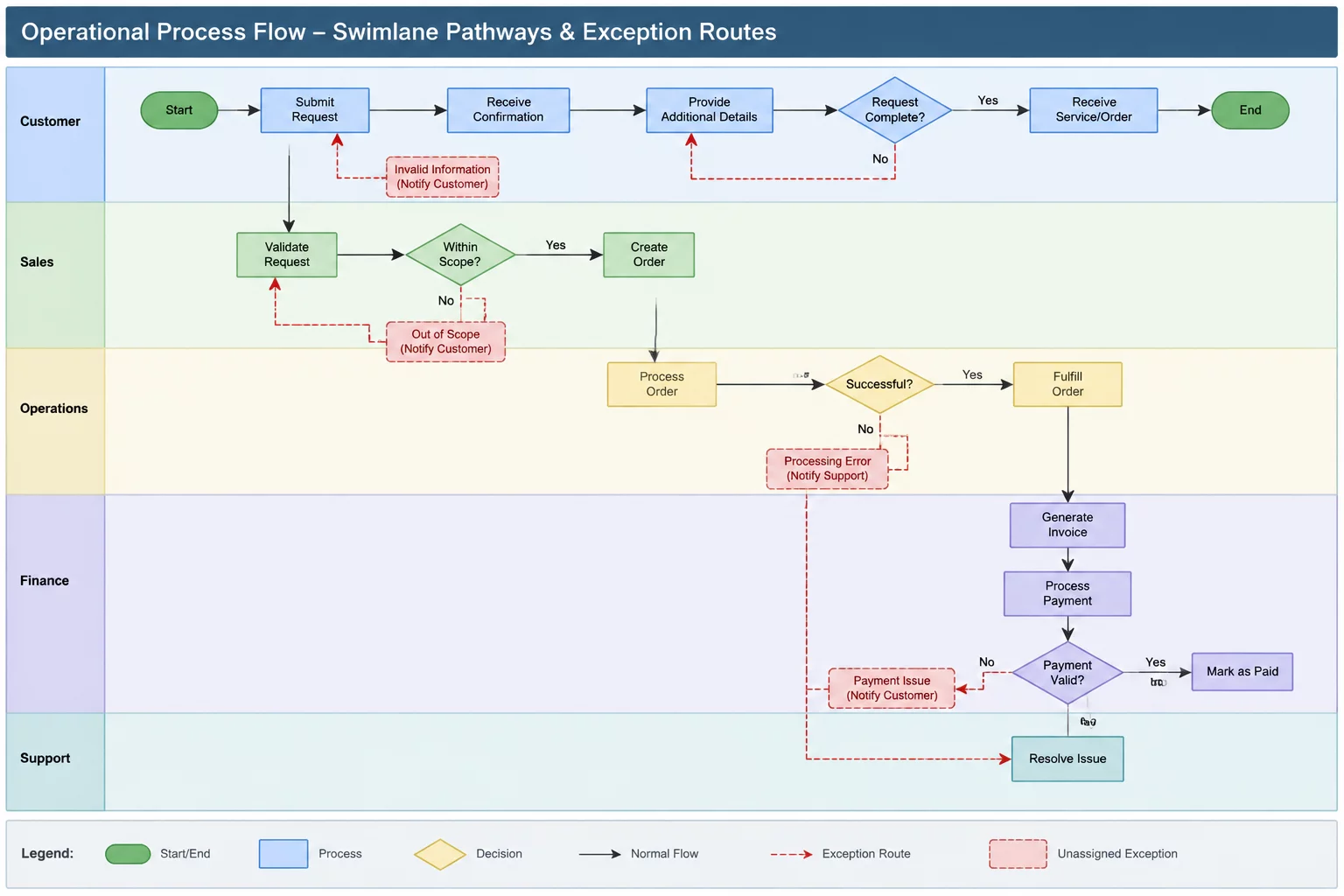
The affirmative path continues toward operational provisioning. The negative path leads to an explicit remediation flow: notifying the requester, updating system registries, and detailing re-submission prerequisites. For advanced multi-tiered setups, designers can introduce an escalation fork that redirects stagnant requests to alternate authorities once time thresholds elapse.
Governance, SLA Triggers, and Draw.io Metadata
Within draw.io and BPMN modeling environments, decision nodes should carry custom metadata rather than generic text annotations. By assigning properties such as decisionOwner, SLAHours, and rejectionPolicy directly to the shape, operational teams bridge visual diagrams with executable engines. Reviewers can query the diagram XML to discover missing rejection paths before deploying workflows.
Conducting routine diagram linting ensures that no approval node remains a dead-end task. Teams should enforce architecture reviews where any diagram presenting approvals as flat process boxes is returned to its author for fork extraction and boundary definition.