The Context of the Unowned Exception Branch
In standard workflow documentation, sunny-day paths receive exhaustive scrutiny. Every step, approval gate, and handoff between departments features explicit operational owners. Yet when systems encounter validation mismatches, integration timeouts, or non-conforming inputs, diagrams frequently route flow arrows into vague catch-all bins labeled "Exception" or "Admin Review." These terminal or floating nodes lack named roles, SLAs, or downstream disposition logic.
Operations teams assume engineering monitors these exceptions, while engineering presumes operational clerks triage stalled records manually. As a direct consequence, work items linger in processing backlogs until external customers trigger escalation inquiries.
This structural silence conceals operational bottlenecks during capacity planning. When workflow metrics evaluate mean completion times, orphaned exception records are either excluded as outliers or quietly purged during quarterly maintenance cycles.
How Unassigned Rejections Cause Cascading Friction
Analyzing workflow topologies across multi-tier enterprise systems highlights recurring architectural failures whenever branch custodians remain undefined:
- Diffuse Responsibility: Without a singular team or lane assignment, incident alerts broadcast to wide distribution lists where everyone expects someone else to intervene.
- Lacking Escalation Horizons: Secondary timeouts fail to trigger because the initial exception was modeled as a terminal failure rather than an active state awaiting resolution.
- Data Drift and Schema Invalidation: Stalled items accumulate state divergence, rendering automated recovery scripts invalid when manual intervention is finally attempted weeks later.
Process modelers often treat exceptions as exceptional anomalies rather than recurring business transactions. In production environments handling tens of thousands of requests daily, a 1% exception rate yields hundreds of stranded tasks every week requiring precise ownership.
Establishing Deterministic Ownership and Disposition Paths
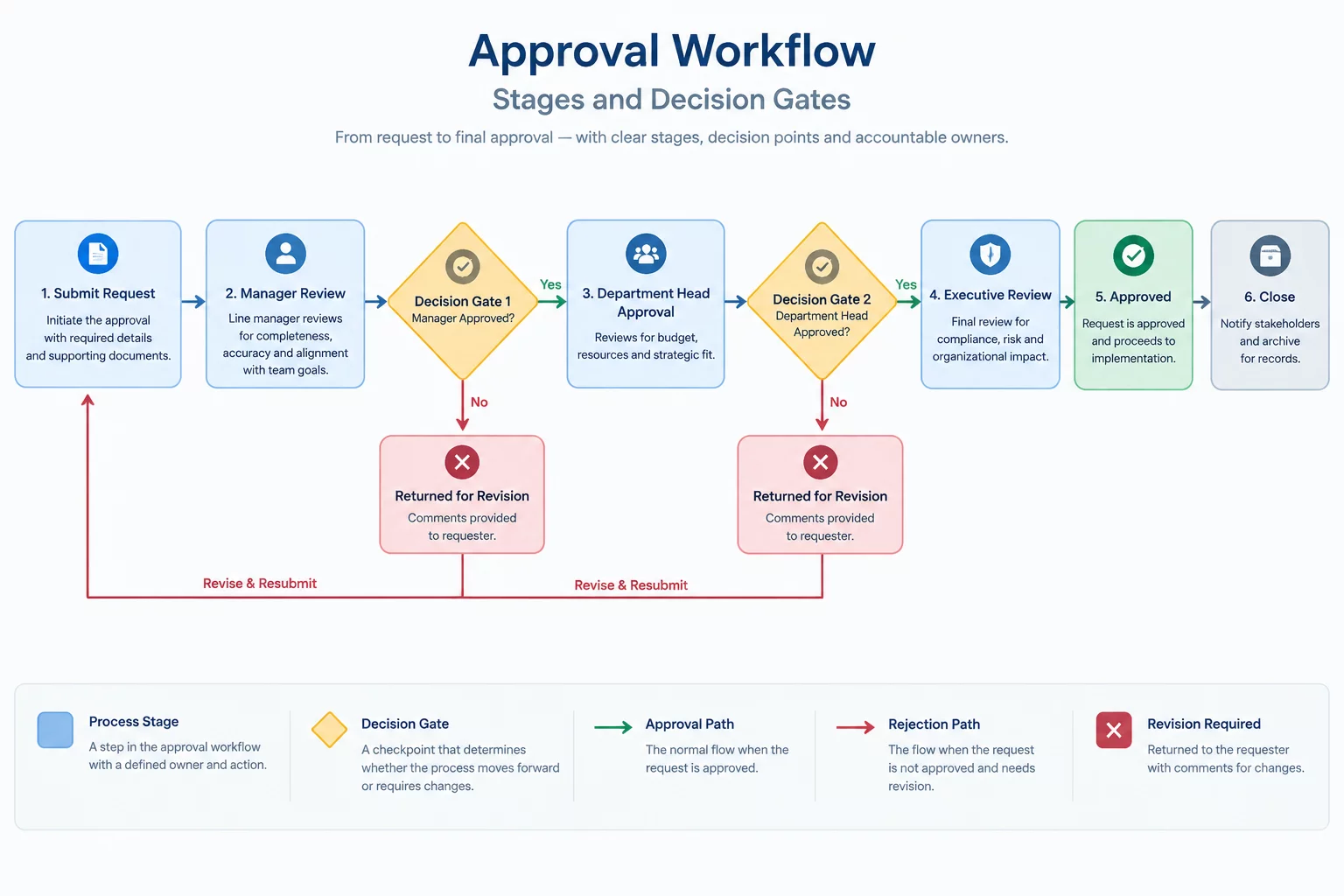
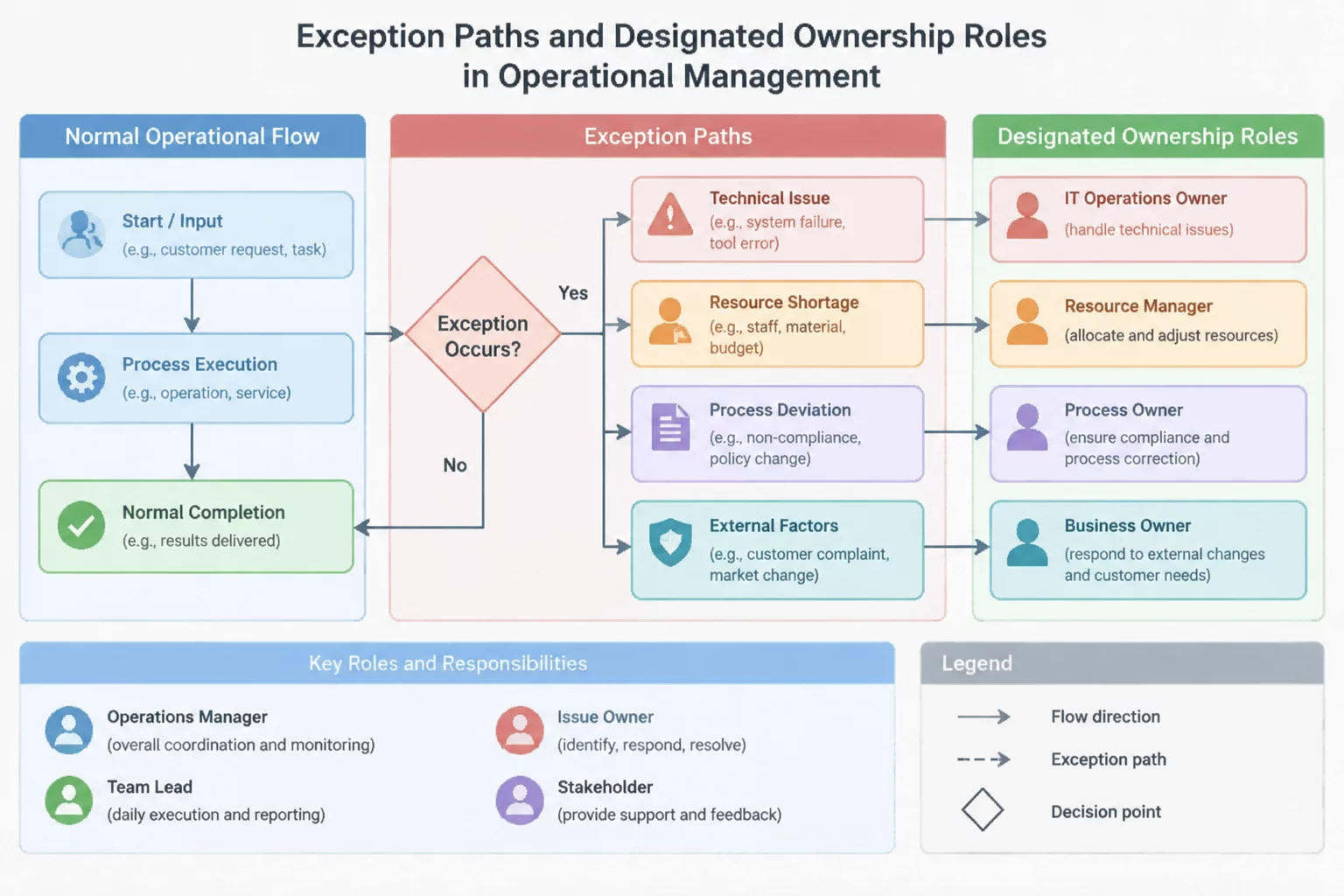
Rectifying the unowned exception pattern requires treating negative outcomes with the same structural fidelity as successful workflows. Each decision diamond producing an anomalous exit must feed into a bounded swimlane governed by an explicit Custodian Role and a strictly bound Resolution SLA.
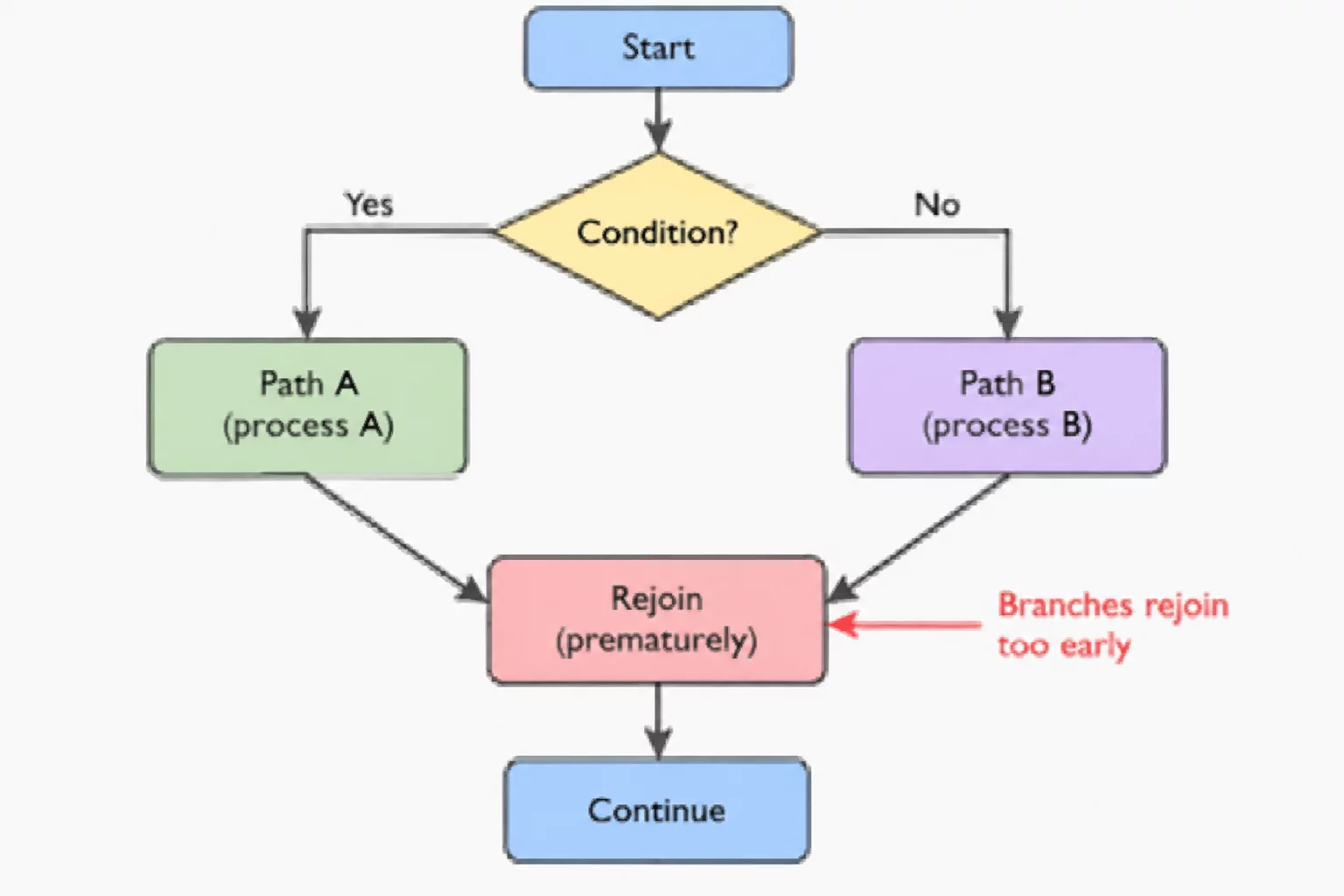
Rejoining error paths back into primary streams without re-validation invites state corruption. Therefore, the remediation model mandates secondary decision nodes that verify corrective remediation before granting re-entry into downstream processing pipelines.
Enforcing Exception Accountability in draw.io Artifacts
Diagrams constructed in draw.io or integrated modeling toolsets must enforce custom metadata attributes across all outbound connectors leaving conditional gates. Attaching custodian_role, target_queue, and sla_hours directly to diagram objects ensures visual integrity aligns with runtime orchestration rules.
Periodic architectural reviews should flag any connector leading to an action block that lacks a defined swimlane or explicit role annotation. Integrating these visual linting checks into pull requests protects operational teams from unexpected operational blind spots.